NEUROPTIMAL® NEUROFEEDBACK · EPILEPSY & WELLBEING
Living with epilepsy asks a lot — of you, and of the people who love you. Alongside the medical care you already have, many people look for gentle ways to feel calmer, rest better and enjoy more of everyday life. This page explains, honestly, where NeurOptimal® brain training may fit.
Always alongside your neurologist · Sessions 33–45 minutes

YOU ARE NOT ALONE
More than 266,000 Australians live with epilepsy, and about 1 in 25 people will develop it at some point in their lives (Epilepsy Action Australia). It touches every age — from young children to older adults.
For many people, the seizures are only part of the story. There is the planning around sleep and medication, the worry about when the next one might come, the tiredness afterwards, and the quiet emotional load of living with uncertainty. Families carry this too.
THE SCIENCE, SIMPLY
When people with epilepsy are asked what seems to set off their seizures, two answers come up again and again: emotional stress and lack of sleep (Nakken et al., 2005). Your neurologist is the right person to talk with about your own triggers — but it is a reminder that calm and good rest matter.
Neurofeedback has been studied in epilepsy for decades. Most of that research used older, protocol-based methods that train specific brainwave patterns, under clinical supervision (Tan et al., 2009). NeurOptimal® is different: it does not target seizures or any condition, and it has not been studied as an epilepsy treatment. We share this research for context only.
A GENTLE COMPANION
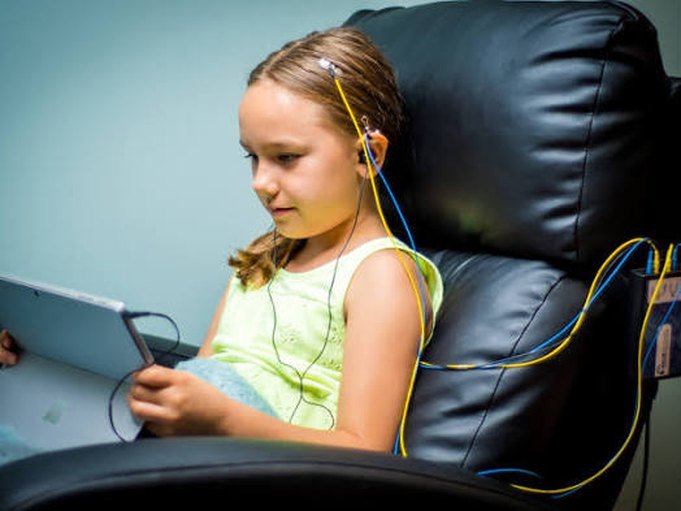
NeurOptimal® is non-invasive: the sensors only listen, nothing is sent into the brain, and there are no flashing lights — just music with tiny pauses. You simply rest, read or close your eyes.
People living with epilepsy who train with us usually come for the same reasons as anyone else: to feel calmer, to wind down more easily at night, and to enjoy a little more ease in daily life.
EVERYDAY CARE
Neurofeedback, gently explained · Neurofeedback for sleep · Neurofeedback Rental
NeurOptimal® Explainer · Official NeurOptimal® video
Training vs. Treatment · Official NeurOptimal® video
QUESTIONS
NeurOptimal® is not a treatment for epilepsy and makes no claims about seizures. Your neurologist manages your epilepsy care.
NeurOptimal® is non-invasive and uses no flashing lights. Every person is different, so please check with your neurologist first and tell us your seizure history and plan.
No. Never change or stop medication without your doctor.
Yes, with their medical team informed and a parent present.
Yes — with home rental, after a discovery call and a check with your doctor.
Mental Health OT Australia
If you would like to talk it through, we are here. A short, no-pressure discovery call is a lovely first step — or call us, or send us a message. We will listen, answer your questions honestly, and help you decide what, if anything, comes next.
Led by Bita Farahani, senior occupational therapist · Wembley, Perth · Online and home rental Australia-wide
Prefer to write? Send us an enquiry and we will be in touch soon.
NeurOptimal® neurofeedback is a general wellness brain-training system. It does not diagnose, treat, prevent or cure any medical or psychological condition, and individual experiences vary. It is not a substitute for advice or care from your GP or another qualified health professional. If you need urgent support, call Lifeline on 13 11 14 or 000 in an emergency. NeurOptimal® and Dynamical Neurofeedback® are registered trademarks of Zengar Institute Inc. Mental Health OT Australia does not promise NDIS or other funding for neurofeedback or device rental.