NEUROPTIMAL® NEUROFEEDBACK · PERTH & AUSTRALIA-WIDE
A quiet, non-invasive way to give your brain a mirror of its own activity — so it can notice, settle and find its own rhythm again. In our Wembley clinic, or at home anywhere in Australia.
Led by Bita Farahani, senior occupational therapist · Sessions 33–45 minutes · No diagnosis or brain scan needed
THE IDEA
Your brain is quietly running the show all day long. It keeps you breathing, steadies your heart, sorts through sounds and faces, and decides — thousands of times a second — what matters and what can be let go. Most of this happens without you ever thinking about it.
Most of the time, the brain is remarkably good at adjusting. But life can push it into patterns that stop being helpful: staying on high alert after the danger has passed, lying awake at 2 am, losing focus halfway through a sentence, or feeling flat and foggy for weeks.
Neurofeedback is a way of giving the brain information about its own activity, in real time. Small sensors read the brain’s electrical signals (the EEG), and the system feeds something back — usually through sound — so the brain can notice what it has just done. Researchers describe it as a “closed loop”: the brain acts, sees itself, and adjusts (Sitaram et al., 2017).
It is a little like a mirror. You don’t need anyone to tell you your collar is crooked; you simply see it, and straighten it.


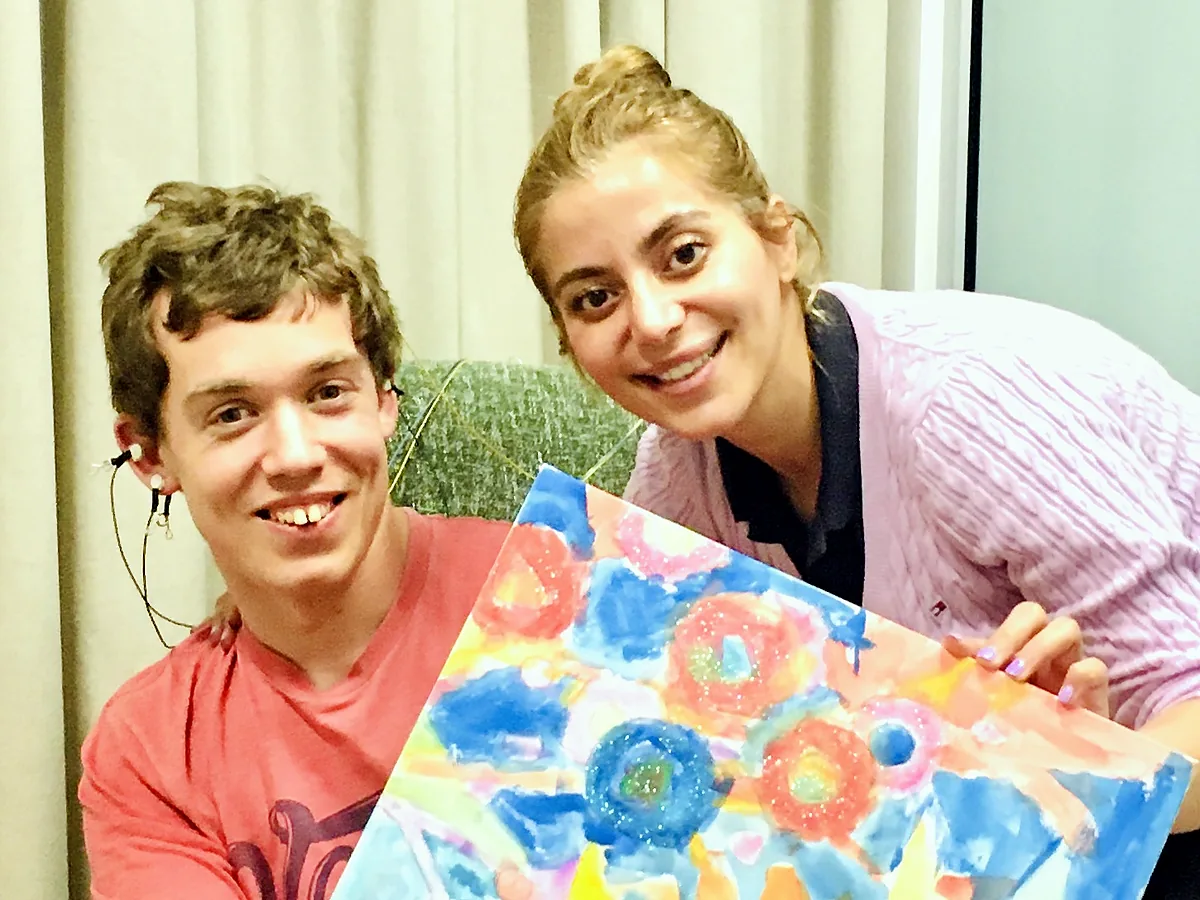
A session is quiet and ordinary: colouring, painting, playing or resting while the system listens.
THE LOOP IN THREE STEPS
THE SYSTEM WE USE
There are many kinds of neurofeedback. The system we use is NeurOptimal® Dynamical Neurofeedback®, developed by clinical psychologists Dr Valdeane Brown and Dr Susan Cheshire Brown and their Zengar Institute in Canada.
Older “linear” systems usually start with a brain map, decide which brainwaves are “too high” or “too low”, and then reward the brain for moving toward a target. NeurOptimal® takes a different view. It does not diagnose, it does not choose a target, and it does not push the brain in any direction. Instead, it watches the brain’s electrical activity across both hemispheres, moment by moment, and when it detects a sudden shift it gives the briefest pause in your music (NeurOptimal® Discovery Guide).
That tiny pause is the whole conversation. Think of the rumble strip at the edge of a highway: you feel it, and you gently steer back — not because someone grabbed the wheel, but because you noticed. The brain decides what to do with the information. Nothing is sent into the brain; the sensors only listen.
NeurOptimal® is classed by its maker as a general wellness device: a training, not a treatment.
You don’t need a label, a referral or a qEEG to begin.
The system mirrors; your brain chooses. There is no “target” to hit.
Rest, read, colour or close your eyes. There is nothing to get right.
YOUR SESSION
A NeurOptimal® session is simple, and most people find it surprisingly relaxing. In our Wembley clinic you settle into a comfortable chair; at home you choose your favourite corner of the sofa.
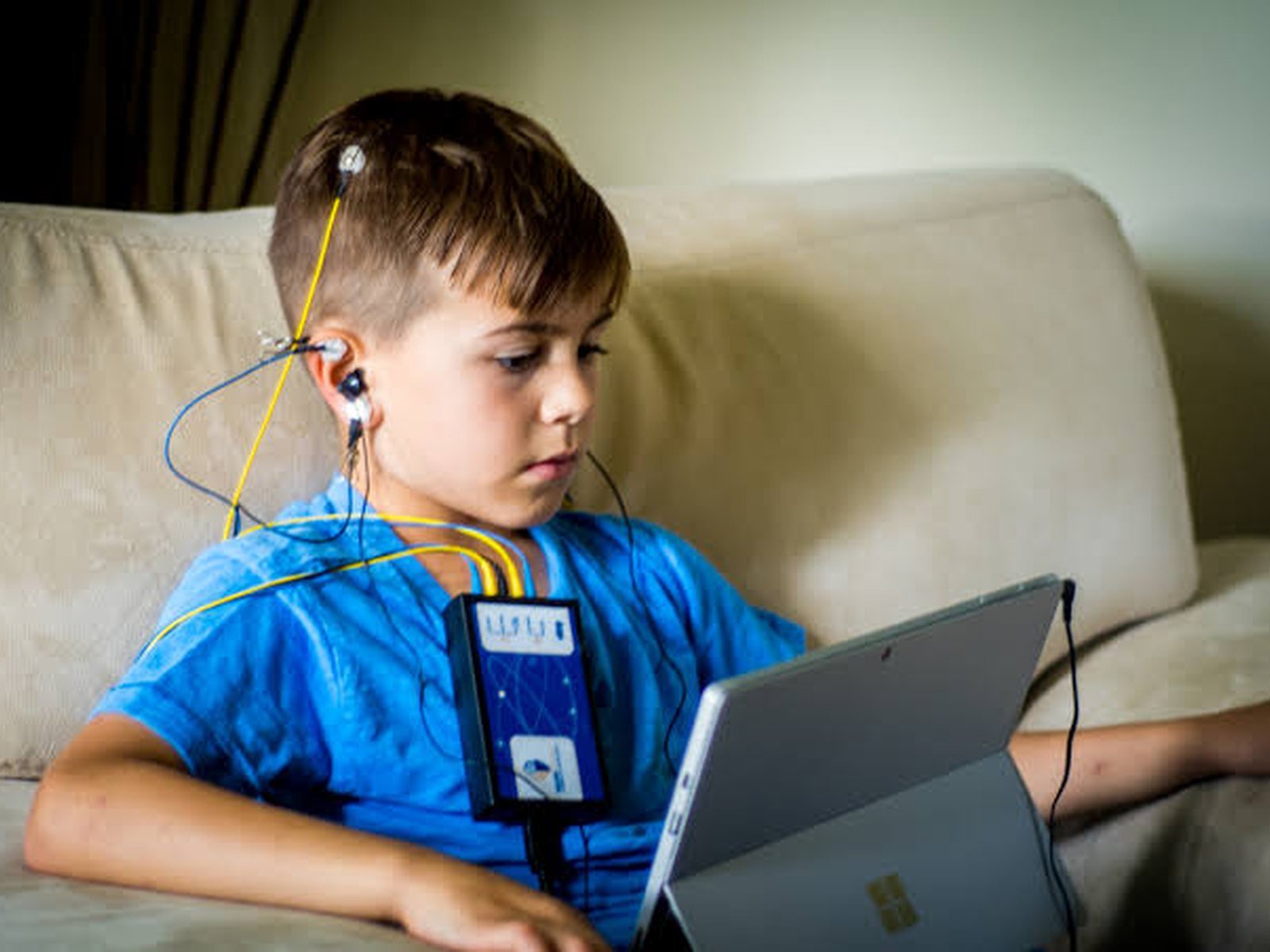
Children often draw, colour or play quietly during a session. Adults read, rest, or simply close their eyes.

THE EXPERIENCE
During a session, most people simply feel calm — some even drift into a light doze. Afterwards, the most common words we hear are “relaxed”, “lighter” and “clearer”.
Over a series of sessions, people often describe small, everyday shifts rather than dramatic moments: winding down a little more easily at night; waking up more refreshed; a calmer response to the morning rush; staying with a task a little longer; feeling more like themselves.
Everyone is different, and nothing is guaranteed. Some people notice something after the first session; for others, changes are quieter and build gradually. Occasionally people feel tired, emotional or unusually relaxed after a session — much as you might after a deep rest. Tell us how you feel, and we go at a pace that suits you.
“Brain training is not about fixing what’s broken. It’s about giving a remarkable system the information it needs to find its own balance.”Bita Farahani

WHO IT’S FOR
People come to NeurOptimal® for many different reasons. Some arrive with a clear concern — stress, sleep, focus, or a nervous system that never seems to switch off. Others simply want to feel sharper, steadier and more resilient in a busy life. You don’t need to be unwell to train your brain, just as you don’t need to be injured to go to the gym.

Gentle, playful sessions that fit alongside school, therapy and family life.

For busy minds, restless nights, stress at work, and life’s big transitions.
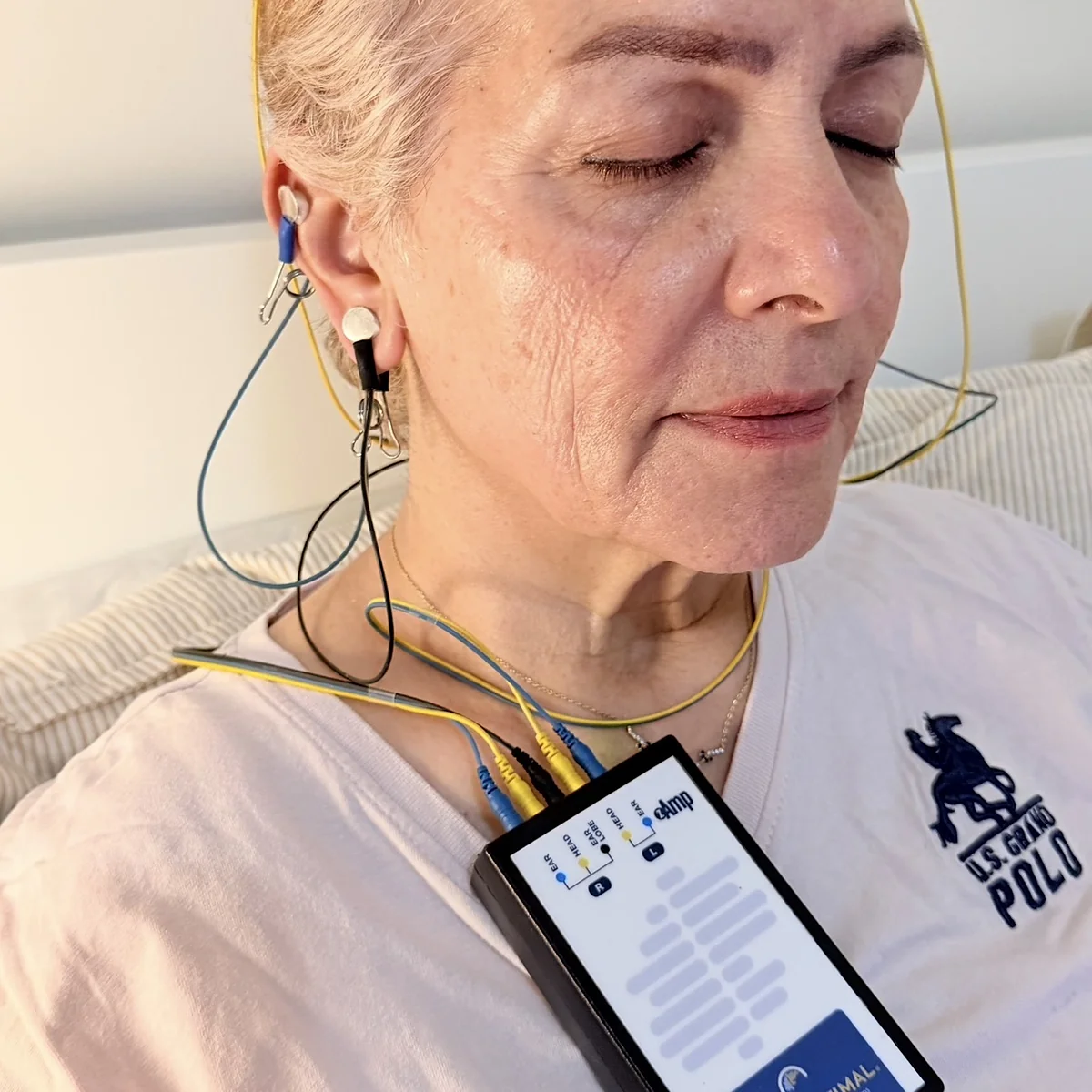
Brain training as part of staying engaged, curious and connected.

Athletes, students, creatives and professionals who want to feel clear and present.
EXPLORE BY TOPIC
Choose the card closest to what you’re living with. Each one opens a calm, plain-language page — the science, how NeurOptimal® may fit, and official videos if you’d rather watch than read.
NeurOptimal® is wellness brain training. It does not diagnose, treat or cure any condition. If you need urgent support, call Lifeline on 13 11 14.

Stress, burnout, emotional balance — feeling like yourself again.
Read more →
When your mind stays on high alert long after the day is done.
Read more →
For nights that won’t settle and mornings that feel heavy.
Read more →
For sleep, mood and brain fog through a big life transition.
Read more →
When attention, restlessness or follow-through make every day harder.
Read more →
Gentle support for regulation, alongside occupational therapy.
Read more →
For a nervous system that still feels on guard.
Read more →
When everything takes more energy than it should.
Read more →
A little more space between a feeling and a reaction.
Read more →
When you’ve been running on empty for far too long.
Read more →
Long swings, broken sleep and the switch between site and home.
Read more →
For days when thinking feels cloudy and effortful.
Read more →
Clarity for when you want to do your best work.
Read more →
Calm focus and recovery, alongside the way you already train.
Read more →
Calm focus over the ball, and steadier nerves on the last few holes.
Read more →
Supporting a flexible, engaged mind across the years.
Read more →
Calm, rest and wellbeing — alongside medical and aged care.
Read more →
Sessions can include colouring, play, or simply sitting quietly.
Read more →
A quiet companion to the stillness you already practise.
Read more →
When listening and following speech feel like hard work.
Read more →
No diagnosis needed — just a wish to feel more like yourself.
Read more →
For the pressure, big feelings and busy minds of the teenage years.
Read more →
Study, first jobs, big decisions — a calmer place to stand.
Read more →
Gentle, restful sessions alongside your doctor’s care.
Read more →
Gentle support during recovery — alongside your medical team.
Read more →
Calm, rest and wellbeing — alongside rehab and your medical team.
Read more →
Calm brain training for wellbeing — always alongside your neurologist.
Read more →
Calm, confidence and everyday skills — with OT at the centre.
Read more →
For the frustration and fatigue that can come with reading and learning.
Read more →OCCUPATIONAL THERAPY
Occupational therapy is about the things that make up your day — getting ready, learning, working, playing, resting and connecting with the people you love (WFOT, 2012). Bita Farahani, our senior occupational therapist, uses NeurOptimal® as one tool among many: a calm, regulated starting point that can make everyday goals feel more within reach.
A session might combine brain training with a meaningful activity — a craft, a game, a sensory task, or simply practising a routine. Brain training is never a replacement for occupational therapy, and it is not a medical treatment. When the two sit together, the aim is simple: a nervous system settled enough for everyday life to feel more possible.

HOME RENTAL
Not everyone can travel to Perth — and many people simply prefer the comfort of home. We can deliver a complete NeurOptimal® system to your door, Australia-wide, with a remote orientation and ongoing support from our team. The whole family can train, on your own schedule, in your own space.
Home rental is a separate general-wellness service from occupational therapy.
Prefer to come in? Our clinic is in Wembley — see Neurofeedback in Perth.
OFFICIAL NEUROPTIMAL® VIDEOS
Three short films from the makers of NeurOptimal® — what it is, how it feels, and what a session looks like.
NeurOptimal® Explainer · Official NeurOptimal® video
Understanding NeurOptimal® · Official NeurOptimal® video
NeurOptimal®: Starting a Session · Official NeurOptimal® video
THE EVIDENCE, HONESTLY
Neurofeedback has been studied for more than fifty years, and scientists now understand a good deal about how the brain learns from feedback about itself (Sitaram et al., 2017). Reviews in areas such as stress, low mood and trauma show promising signals, while also calling for larger, better-designed trials (Krause et al., 2024; Fernández-Álvarez et al., 2022; Askovic et al., 2023).
Most published studies use different neurofeedback methods from NeurOptimal®, so we never borrow their results as promises. What we can offer is honesty: a gentle, non-invasive wellness practice, guided by an experienced therapist, that many people find calming and worthwhile.
QUESTIONS
NeurOptimal® is non-invasive: the sensors only read your brain’s activity, and nothing is sent into the brain. Some people feel tired, emotional or very relaxed after a session. We’ll talk this through and adjust the pace to suit you.
Sessions run 33 to 45 minutes, depending on your therapist’s judgement and your needs. Allow a few extra minutes for sensors to go on and come off.
It varies from person to person. Some people notice changes early; others prefer to train regularly over several weeks. We’ll check in with you as you go, rather than lock you into a fixed number.
No. NeurOptimal® does not use a brain map and does not need a diagnosis. If you already have one, or you’re in the care of a GP or psychologist, we’ll work alongside that care.
No. NeurOptimal® is wellness brain training. It does not diagnose, treat or cure any condition, and it is not a substitute for medical or psychological care.
Yes. NeurOptimal® is used from early childhood to older age. Children often colour, draw or play quietly during a session.
Yes. We deliver home systems Australia-wide, with a remote orientation and ongoing support. See Neurofeedback Rental.
Book a free discovery call, call us on 0406 107 775, or leave a message in the form below. There’s no pressure — just a friendly conversation.
Mental Health OT Australia
If you would like to talk it through, we are here. A short, no-pressure discovery call is a lovely first step — or call us, or send us a message. We will listen, answer your questions honestly, and help you decide what, if anything, comes next.
Led by Bita Farahani, senior occupational therapist · Wembley, Perth · Online and home rental Australia-wide
Prefer to write? Send us an enquiry and we will be in touch soon.
NeurOptimal® neurofeedback is a general wellness brain-training system. It does not diagnose, treat, prevent or cure any medical or psychological condition, and individual experiences vary. It is not a substitute for advice or care from your GP or another qualified health professional. If you need urgent support, call Lifeline on 13 11 14 or 000 in an emergency. NeurOptimal® and Dynamical Neurofeedback® are registered trademarks of Zengar Institute Inc. Mental Health OT Australia does not promise NDIS or other funding for neurofeedback or device rental.