
NDIS OCCUPATIONAL THERAPY · PERTH AND TELEHEALTH
Occupational Therapy for PDA (Pathological Demand Avoidance)
Gentle, low-demand occupational therapy for children, teens and adults with a PDA profile of autism, and for the families who love them. Support may include OT, NeurOptimal® neurofeedback, CBT-informed strategies and NDIS Functional Capacity Assessments. In Perth and by telehealth across Australia.
Care led by Bita Farahani, Founder and Senior Occupational Therapist, with 21 years’ experience · Referrals · Contact Us

Who it’s for
Children, teens and adults with a PDA profile, diagnosed or suspected, and their families.
Where
Home, school, the community, our Wembley base, or telehealth across Australia.
Our approach
Low-demand, collaborative and choice-based. Anxiety first, autonomy respected.
Four supports
Occupational therapy, optional neurofeedback, CBT-informed strategies, and NDIS Functional Capacity Assessments by Bita Farahani.
Referrals
Self-referral welcome, plus GPs, schools, support coordinators and other professionals.
UNDERSTANDING PDA
When “just put your shoes on” feels impossible
It is 8:15 on a school morning. The uniform is out and the bag is packed. Your child, who was chatting happily a minute ago, is now under the doona, saying their legs don’t work. Yesterday they got ready with no trouble. Today, the same request feels like a wall.
Or perhaps you are an adult who genuinely wants to book the appointment, reply to the message or cook the meal you were looking forward to. The moment it becomes something you have to do, everything in your body says no.
This is not naughtiness, laziness or poor parenting. PDA stands for Pathological Demand Avoidance. Many people now call it a Persistent Drive for Autonomy. It is understood as a profile within autism. For people with a PDA profile, everyday expectations can feel like a threat and set off a fast, anxiety-driven stress response. As described by the PDA Society, it is often a case of “can’t, not won’t”.
It is not about being defiant or difficult on purpose. It reflects a highly sensitive nervous system, and the person often finds the conflict that follows just as distressing as the people around them.
Is PDA a diagnosis in Australia? PDA is not a separate diagnosis in the DSM-5 or ICD-11. Australia’s national autism assessment guideline recognises it as a behavioural profile within autism. During an autism assessment, a clinician may note “a PDA profile” or “demand avoidance traits”. Because many people with a PDA profile are socially motivated, chatty and may make eye contact, PDA can be missed in autism assessments or mistaken for Oppositional Defiant Disorder (ODD), a conduct-related diagnosis, or an anxiety condition. Many clinicians in the UK, and some in Australia, recognise PDA as a profile within autism, though not every professional does yet, which is why a clear picture of daily life matters. Occupational therapists do not diagnose autism or PDA, and you do not need a PDA label to work with us.
What causes PDA?
There is no single known cause, and research is still at an early stage. Studies suggest that anxiety, difficulty tolerating uncertainty and big, fast-moving emotions may all play a part. PDA is most often described within autism, and some people also have ADHD, anxiety or sensory differences. PDA is not caused by parenting. Because every person is different, we look at the whole picture, including sensory needs, emotions, routines, school and family life, and plan support around the person in front of us.
How PDA may differ from Oppositional Defiant Disorder (ODD)
Both can involve resisting rules or requests, so they are sometimes confused. The reasons, and the approaches that may help, are often different. An occupational therapist does not diagnose PDA or ODD. This comparison is general information only.
What may be driving it
Anxiety, and a nervous system threat response when autonomy feels at risk.
Anger, irritability, resentment, or testing boundaries may be more central.
Where avoidance may show up
May apply to many kinds of demand, including enjoyable activities and basic bodily needs.
May be directed more often at authority figures, rules and unpleasant tasks.
Rewards and consequences
Reward and consequence systems may not help, and praise or rewards may feel like another demand.
Clear boundaries, consistent consequences and reward systems may be more helpful for some people.
How resistance may look
A person may use humour, negotiation or conversation to move away from a demand.
A person may more directly argue with, or confront, a person in authority.
SIGNS YOU MAY RECOGNISE
What PDA can look like, and how OT may help
Every person with PDA is different, and these signs can change from day to day. Under each sign is the kind of support occupational therapy may offer. Nothing is forced, and goals are set with the person, not for them.
Everyday demands feel like threats
Getting dressed, coming to dinner, brushing teeth. The same resistance may apply to basic bodily needs such as eating, sleeping or using the bathroom, and even to a favourite hobby or game, once it feels like an expectation.
How OT may helpWe map where demands pile up across the day, then reduce and reshape them, using low-demand and declarative language.
Anxiety under the surface
Avoidance is usually driven by anxiety and uncertainty. A person may look calm, cheeky or bossy while their body is in fight, flight or freeze.
How OT may helpAn anxiety-first plan: flexible outlines rather than rigid schedules, extra processing time, and calming strategies that suit the person.
Clever ways to avoid
Distracting, negotiating, making excuses, changing the subject, stalling or using humour. These are coping strategies, not manipulation.
How OT may helpCollaborative problem solving: real choices about how and when, respecting a “no”, and working side by side.
Big feelings, quick shifts
Mood can change quickly, and meltdowns or shutdowns may follow when demands stack up.
How OT may helpCo-regulation, parent coaching and a calm-down plan made together, with regulation tools adapted so they never become another demand.
At home in role play
Many children, and some adults, feel safer in pretend play, characters and stories, and may step into a role to manage a request.
How OT may helpPlay- and interest-based therapy that uses characters, stories and passions as the way in to new skills.
Control and “safe people”
Knowing what is coming and having a say can feel essential to feeling safe. Many people rely closely on a few “safe people”.
How OT may helpShared control: visual options instead of fixed timetables, routines built together, and involving the person’s safe people.
Sensory and body signals
Noise, clothing or busy places can drain capacity. Hunger, thirst, tiredness or needing the toilet may be noticed late.
How OT may helpA personal sensory plan, calm spaces, and playful interoception activities that may help a person notice body signals earlier.
Sociable on the surface
Many people with PDA are chatty and socially motivated, which can hide real difficulties. Heavy masking at school or work may lead to exhaustion and burnout.
How OT may helpEnergy accounting to make capacity visible, pacing, and practical adjustments at school, uni or work.
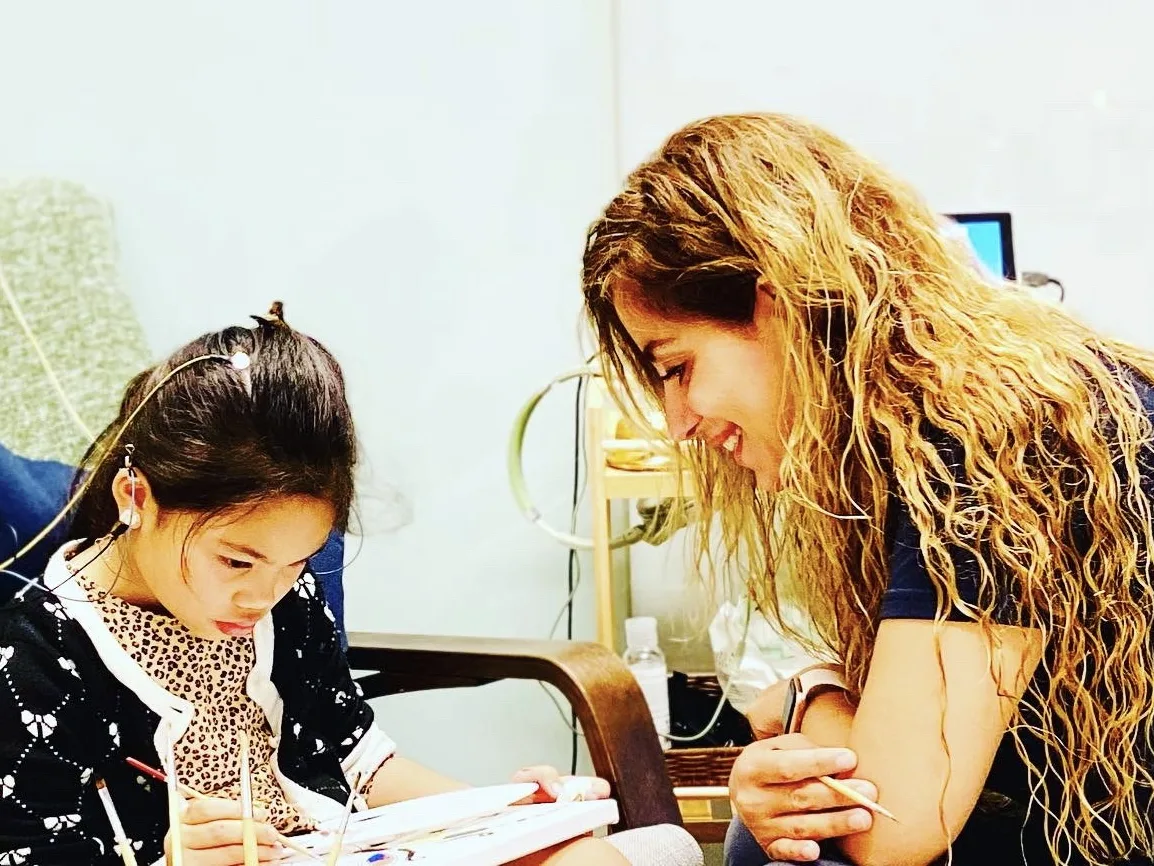
HOW WE WORK · LOW DEMAND, HIGH CONNECTION
Why standard approaches often don’t work
Reward charts, consequences and compliance-based strategies can add pressure. For many people with PDA, pressure may increase anxiety and avoidance. Support tends to work better when it is:
- Collaborative and low-demand, with real choice and control.
- Flexible, adjusting as capacity changes from day to day.
- Built on trust and relationships, not compliance.
- Focused on long-term wellbeing and self-advocacy, not short-term behaviour change.
In practice, we draw on PANDA ideas described by the PDA Society: prioritise what matters, lower anxiety first, negotiate together, soften demands and adapt as you go. Progress is measured against goals you choose.
Instead of saying…
- “Put your shoes on now.”
- “Do your homework.”
- “Calm down.”
- “Say thank you to Nan.”
You might try…
- “I wonder where those shoes are hiding today.”
- “I’m stuck on this maths puzzle. It’s a tricky one.”
- “That felt really big. I’m right here.”
- “Thank you, Nan, that was so kind.” (modelling, not asking)
Declarative language shares a thought instead of giving an instruction, which leaves room for the person to choose.
Approaches that may help
Sticker charts, strict routines or firm consequences may raise anxiety for someone with a PDA profile. Families and therapists may find it more helpful to lower anxiety and leave as much autonomy as possible.
- Genuine choices. Offer a real say in the how, when or where: “Do you want to put your socks on before or after breakfast?”
- Collaborate and negotiate. Treat a rule as a shared problem to solve, rather than a top-down instruction.
- Let go of non-essential requests. This may leave more capacity for safety or health needs.
- Humour and play. Turning a task into a game, or using light humour, may help some people feel less threatened by a request.
SENSORY REGULATION AND INTEROCEPTION
Helping the body feel safe enough to say yes
A sensory “cup” that is already full leaves little room for demands. We look at how a person experiences sound, light, touch, movement, food and clothing. Together we plan sensory breaks, calm spaces and tools that may help them feel more settled at home and at school.
We also explore interoception, which means noticing inside-the-body signals such as hunger, a racing heart or needing a break. We do this through play and curiosity, never as a test. Regulation tools such as The Zones of Regulation® can be used as a shared language. Adults model their own feelings too, and the tools are never used as a behaviour chart.
Related support: OT for sensory processing · OT for emotional regulation
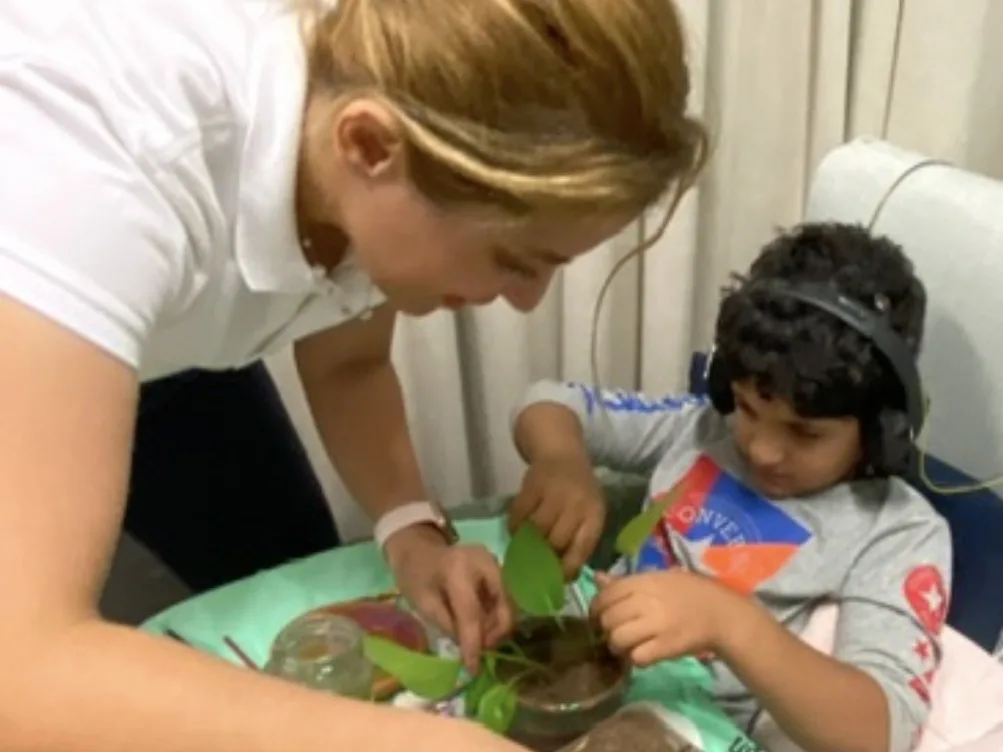
CHILDREN, TEENS AND ADULTS
PDA at home, at school and in adult life
Demands change as people grow. So does the support.
Children
Getting ready, mealtimes, toileting, bedtime and transitions are often the hardest moments. Play is our main tool, because it is where many children with PDA feel most like themselves. Parent coaching helps the whole family feel calmer.
Teens
Expectations rise just as the drive for independence grows. School attendance, friendships and burnout are common worries. We work with the young person on their own goals and, with consent, with the school.
Adults
Internal demands, the “I should”, can be as hard as requests from others. We may work on energy accounting, home routines, work or study and life admin, at a pace that protects your capacity.
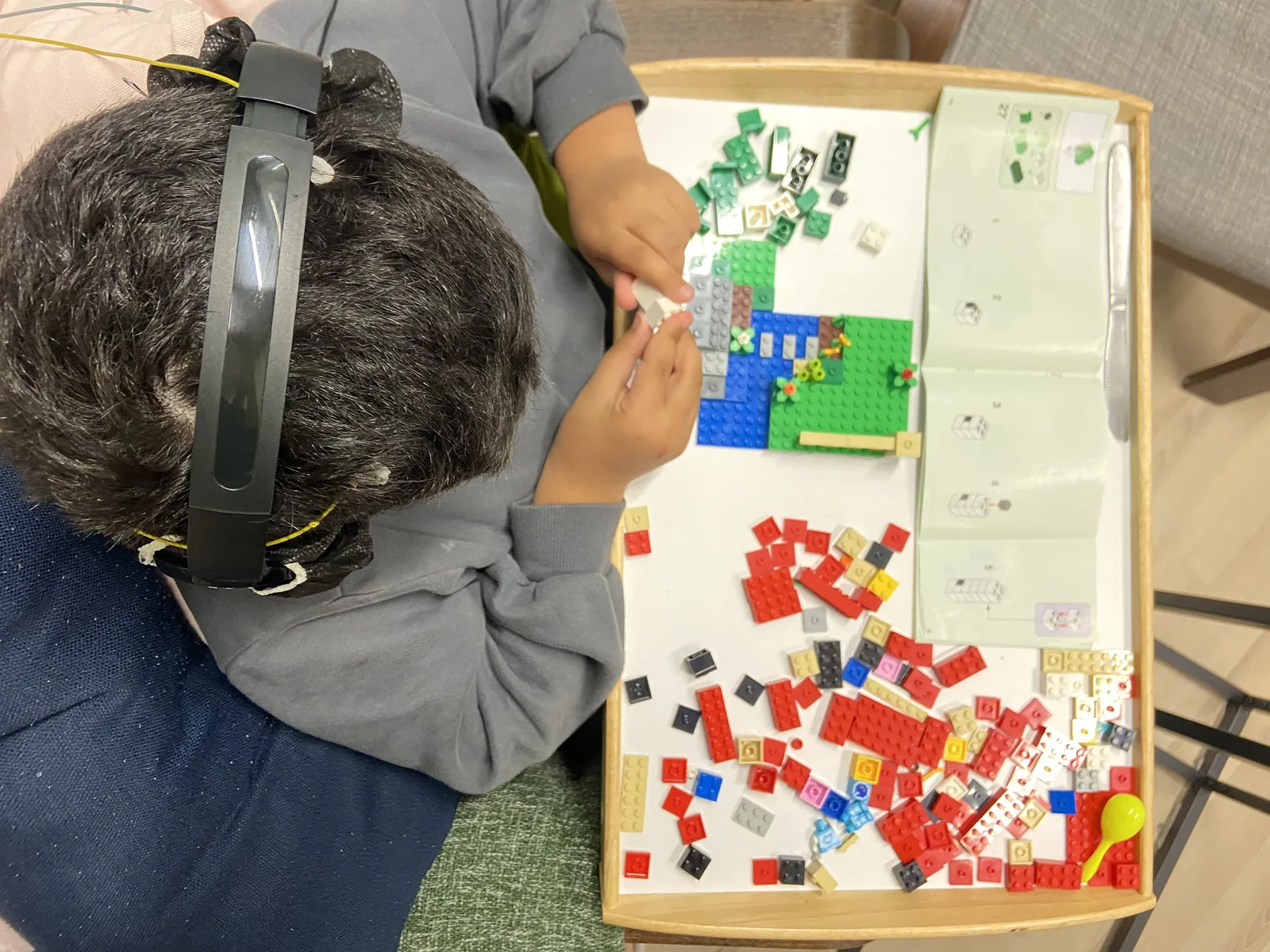
Play- and interest-based therapy
A love of dinosaurs, Minecraft, drawing, animals or a favourite character can become the bridge to practising a skill. A character can pack the bag. A game can include washing hands. A story can rehearse a visit to the dentist. Because the person leads, it feels like play rather than a task.
SCHOOL, NDIS AND EVERYDAY GOALS
Practical goals that fit real life
We write goals in clear, functional language that matches what matters to the person and their family. Examples of what we may work on together:
- Getting ready and out the door with less distress
- Moving between activities and places with less overwhelm
- Taking part in school, study or work in a way that fits capacity
- Personal care, meals and sleep routines that are flexible but reliable
- Noticing early signs of stress and using a regulation strategy
- Joining family, social and community activities by choice
- More independence with household and life skills
- Coaching for families, teachers and support workers to use consistent, low-demand approaches
With your consent, we can share practical recommendations with your child’s school. These might include a reduced-demand plan, a calm space and a safe person, choice in tasks, written rather than spoken instructions, and flexible attendance where needed.
NDIS
Occupational therapy may be funded through the NDIS for eligible participants, where it is part of the person’s plan. We work with self-managed, plan-managed and agency-managed participants. Funding decisions are made by the NDIA. OT and the NDIS.
Private health insurance
Some extras policies may include occupational therapy. Please check your cover with your insurer.
Self-funded
You can also pay privately. Current fees are on our Fees page.
NDIS FUNCTIONAL CAPACITY ASSESSMENTS
Functional Capacity Assessments for people with a PDA profile
PDA can affect every part of daily life, from self-care and routines to study, work, relationships and community participation. Bita Farahani, Senior Occupational Therapist, provides NDIS Functional Capacity Assessments that describe how a PDA profile affects a person’s day-to-day functioning, and explain why flexible, low-demand supports may be needed.
Paced around the person
The assessment is planned around the person’s capacity, with choice about where, when and how it happens. Every assessment is completed by Bita Farahani, Senior Occupational Therapist.
Neuro-affirming recommendations
We work with the person and their family or support network to identify strategies, environmental changes and supports that may reduce pressure and build capacity at a pace that suits them.
In Perth or by telehealth
In-person assessments in Perth, and telehealth assessments across Australia. Funding decisions are made by the NDIA, and we cannot promise any outcome. Functional Capacity Assessment.
PERTH AND ACROSS AUSTRALIA
Where we can work with you
In Perth: at our Wembley base, or at home, at school and in the community, where the demands actually happen.
By telehealth: across Australia, including regional WA towns such as Bunbury, Busselton, Mandurah, Albany, Geraldton, Kalgoorlie and the Pilbara, and families in Sydney, Melbourne, Brisbane, Adelaide, Hobart and Darwin. Telehealth may suit some people with PDA, because the person stays in their own space and can turn the camera off. Telehealth OT.
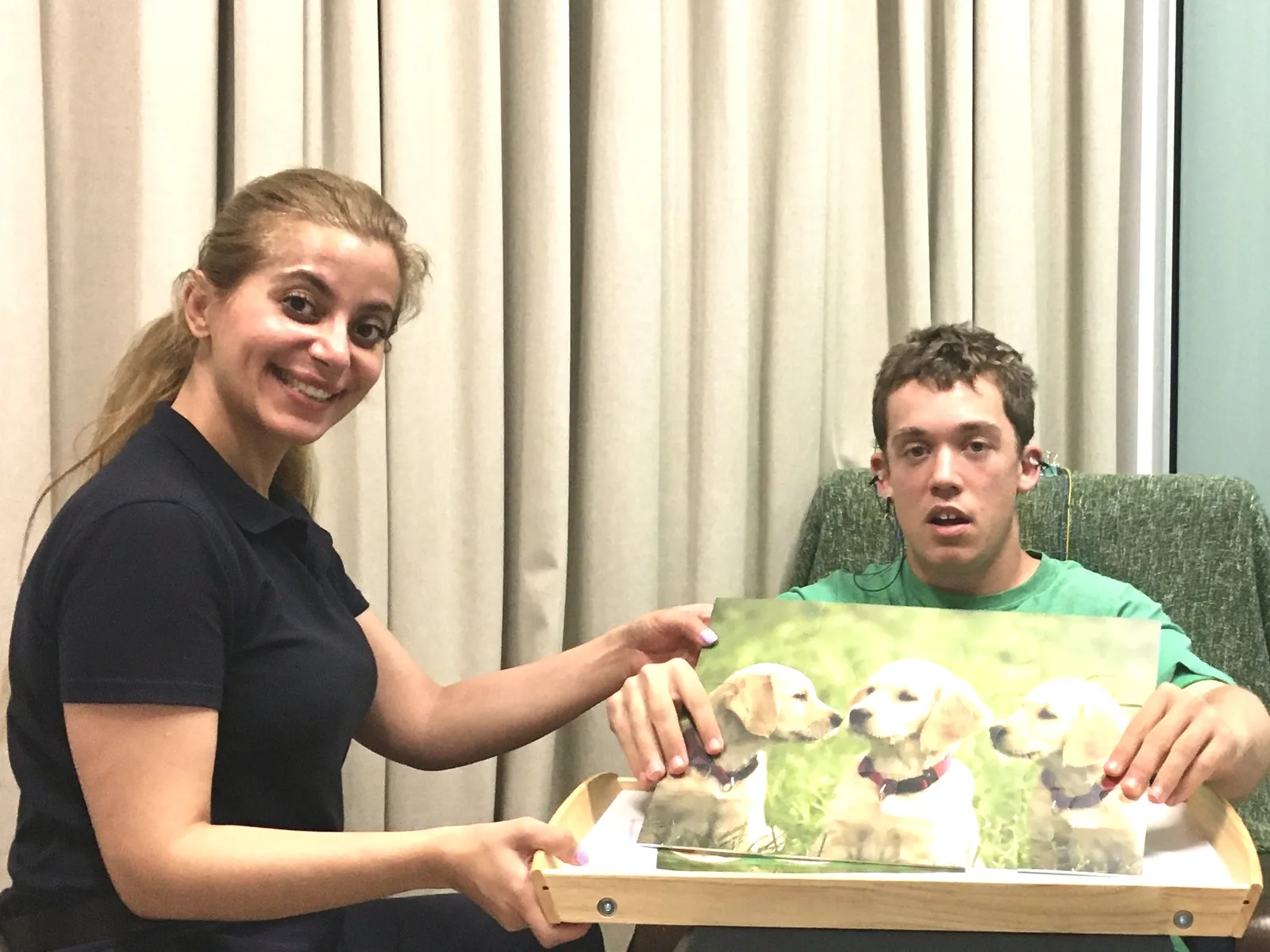
OPTIONAL TOOLS
Neurofeedback and virtual reality, used alongside OT
Some families ask about NeurOptimal® neurofeedback or virtual reality activities. Where they fit, and only if the person chooses them, they may be used as tools inside an occupational therapy plan, never on their own. NeurOptimal® is described by its maker as a training system, not a medical treatment. Virtual reality may offer a low-pressure way to explore and rehearse everyday situations. Neither diagnoses, treats or cures autism or PDA, and either can be stopped at any time. We cannot promise any particular result.
Neurofeedback · Autism and neurofeedback · Virtual reality OT
CBT-INFORMED STRATEGIES
CBT-informed strategies alongside occupational therapy
Within occupational therapy sessions, we may use strategies drawn from cognitive behavioural therapy (CBT), adapted so they stay low-demand and collaborative. For people with PDA, this may help with:
- Noticing anxious thoughts and body signals early
- Thinking more flexibly about uncertainty and change
- Building on the person’s own interests and ideas
- Going at their pace, with no pressure and no homework demands
These are strategies used by an occupational therapist within OT, not psychological therapy. Psychological therapy is provided by psychologists, and we are happy to work alongside the person’s psychologist.
GETTING STARTED
From first call to your own plan
A 15-minute call
A free, no-obligation phone chat about daily life, goals, where sessions could happen and funding. It is not an assessment.
Getting to know you
An occupational therapy assessment of daily life: conversations, gentle observation and input from family or school. The pace is set by the person.
Sessions and review
Sessions at home, at school, in Wembley or by telehealth, with family coaching and regular reviews against your goals. You decide how long to continue.
QUESTIONS
Questions families and adults ask about PDA
What is PDA (Pathological Demand Avoidance), and what causes it?
PDA is a profile within autism, and many people now prefer the term Persistent Drive for Autonomy. People with a PDA profile find everyday demands very hard, even things they want to do, because demands can feel like a threat and trigger a strong, anxiety-driven stress response. There is no single known cause, and research is still developing. Studies suggest anxiety, difficulty with uncertainty and emotional regulation may play a part. PDA is not caused by poor parenting.
Is PDA a diagnosis in Australia?
PDA is not a separate diagnosis in the DSM-5 or ICD-11. Australia’s national guideline for autism assessment recognises it as a behavioural profile within autism. Some paediatricians and psychologists describe a PDA profile in their reports. Because many people with a PDA profile are socially motivated and chatty, PDA can be missed in autism assessments or mistaken for Oppositional Defiant Disorder.
What other conditions can occur alongside PDA?
Many people with a PDA profile are autistic, and some also have ADHD, anxiety, sensory processing differences or difficulties with emotional regulation. Sleep, eating, toileting and school attendance can also be affected. Only a doctor or psychologist can diagnose these conditions. We are happy to work alongside your GP, paediatrician, psychologist or school.
Do we need a diagnosis to see you?
No. You do not need a diagnosis of autism or PDA to book a 15-Minute Free Discovery Call. Occupational therapists do not diagnose autism or PDA. If you have questions about diagnosis, your GP is a good first step.
How can an occupational therapist help a child with PDA?
Occupational therapy looks at everyday life: getting ready, meals, sleep, school and play. We may use low-demand and declarative language, choice-based routines, sensory regulation, play built around interests, and coaching for parents. Goals are agreed together and we cannot promise a particular result.
Do you provide NDIS Functional Capacity Assessments for people with PDA?
Yes. Bita Farahani, Senior Occupational Therapist, provides Functional Capacity Assessments that describe how a PDA profile affects day-to-day functioning and explain why flexible, low-demand supports may be needed. Assessments are available in person in Perth and by telehealth across Australia. Funding decisions are made by the NDIA, and we cannot promise any funding outcome.
Do you work with teens and adults with PDA?
Yes. We work with teens and adults with a PDA profile, including people who were identified later in life. Support may include energy accounting, pacing, home routines, study or work adjustments and planning for recovery from burnout.
Can the NDIS fund occupational therapy for PDA?
Occupational therapy may be funded through the NDIS for eligible participants, where it is part of the person’s plan. We work with self-managed, plan-managed and agency-managed participants. Eligibility and funding decisions are made by the NDIA, and we cannot promise any funding outcome.
Do you offer telehealth outside Perth?
Yes. Telehealth is available across Australia, including regional Western Australia, where it suits the person’s goals. In Perth we can also see people at home, at school, in the community or at our Wembley base.
Do you use neurofeedback or CBT-informed strategies for PDA?
Only if the person chooses them, and only alongside occupational therapy. CBT-informed strategies are used by the occupational therapist within OT and are not psychological therapy; we can work alongside the person’s psychologist. NeurOptimal® is described by its maker as a training system, not a medical treatment. Neither neurofeedback nor virtual reality diagnoses, treats or cures autism or PDA, and we cannot promise any particular result.
What happens in a 15-Minute Free Discovery Call?
It is a short phone call about daily life, goals, where sessions could happen and how funding may work. There is no charge and no obligation to book. It is not an assessment or a therapy session.
READY WHEN YOU ARE
Start with a 15-Minute Free Discovery Call
A short, no-pressure phone call about daily life and what may help. There is no charge and no obligation to book. Professionals can send Referrals at any time.
Occupational therapy does not replace medical, psychological or other specialist care. We do not diagnose autism or PDA, and we do not promise any particular outcome or funding decision. Results vary from person to person. NeurOptimal® neurofeedback is a general wellness brain-training system. It does not diagnose, treat, prevent or cure any medical or psychological condition. NeurOptimal® is a registered trademark of Zengar Institute Inc. The Zones of Regulation® is a registered trademark of its owner. If you need urgent support, call Lifeline on 13 11 14, or 000 in an emergency. Functional Capacity Assessments describe functioning and do not determine funding. Funding information is general; please confirm current rules with the funder. Session fees are on our Fees page.
Mental Health OT Australia Pty Ltd · ACN 700 512 161