TELEHEALTH OT · WEMBLEY, PERTH, WESTERN AUSTRALIA
Bringing occupational therapy to your doorstep: warm, practical support by secure video, from our Wembley, Perth base to your home, workplace or care facility anywhere in Australia.
Children from 4.5, teens, adults and older adults · Led by Bita Farahani, 21 years’ experience · Make a referral
IN SHORT
WHO IT IS FOR
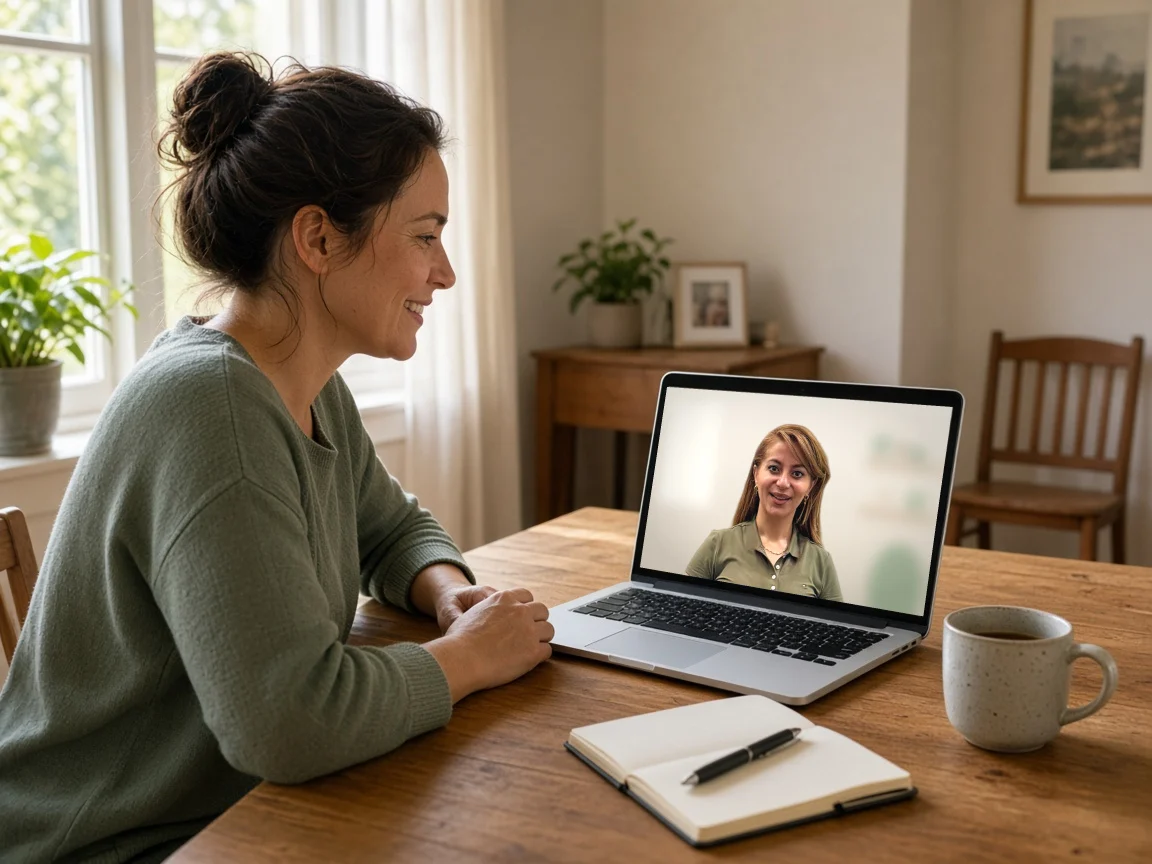
Telehealth OT suits people who would like support at home, who live a long way from a clinic, or who find travel tiring or stressful.
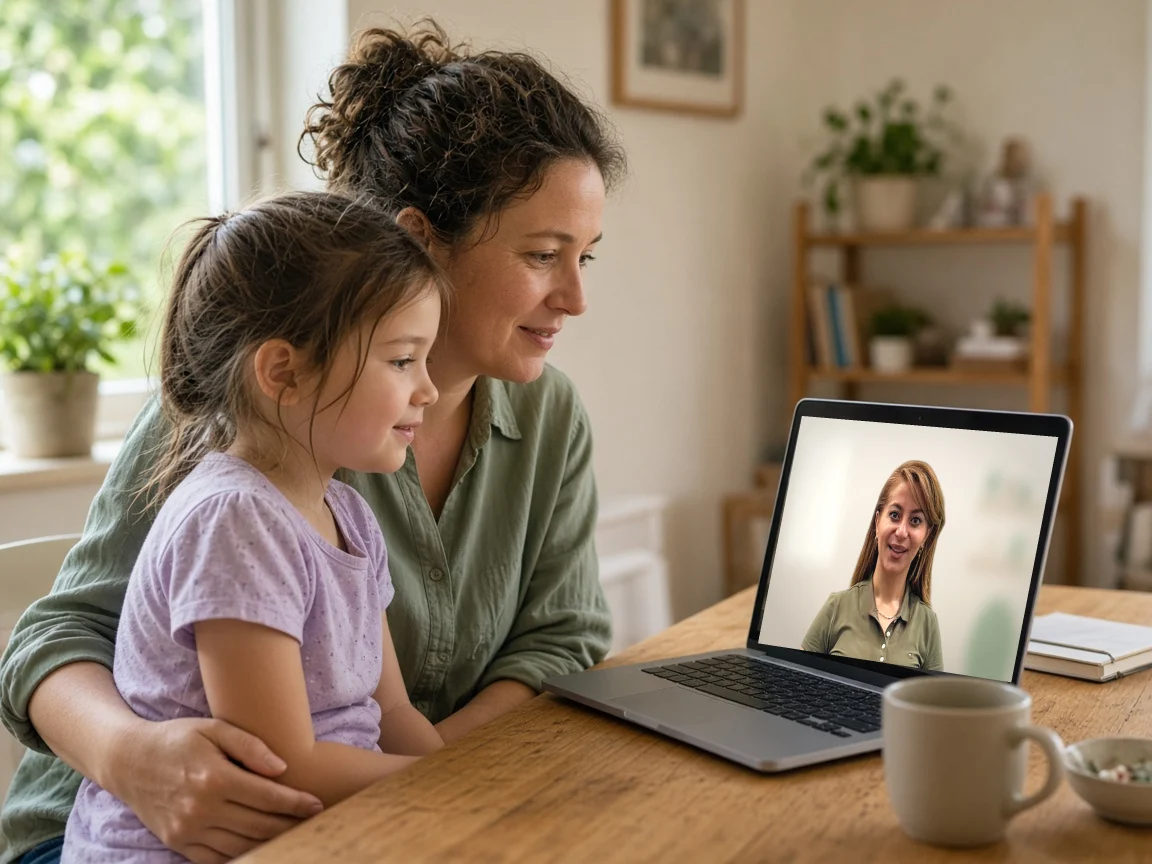
Play-based, gentle sessions. A parent or carer is always with your child, so you can keep going between sessions.
Support with routines, school, sleep, focus, big feelings and sensory needs, with as much or as little family involvement as suits.
Practical help with anxiety, ADHD, autism, trauma, burnout, sleep and the everyday things that have become hard.
Support to stay safe and independent at home, including for people receiving Support at Home, with family or carers able to join.
CHILDREN AND FAMILIES
For children from 4.5, sessions are play-based and gentle, and done from the comfort of home. A parent or carer is always with your child during the session, so you can see what we try and keep it going between sessions.
We can help with routines, sensory and regulation strategies, school readiness and everyday skills. Teens can often take part more independently, with family involved if they would like that.
SUPPORT AT HOME AND OLDER ADULTS
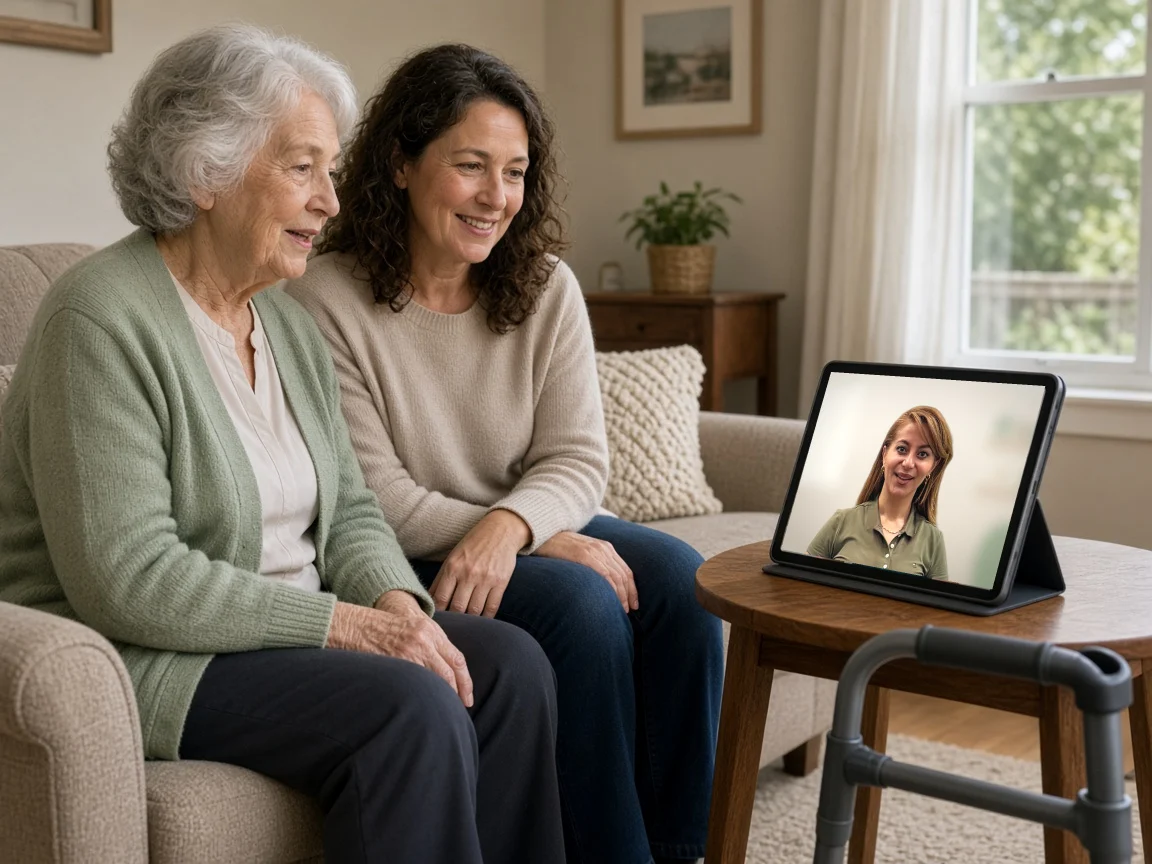
Occupational therapy by video for older adults receiving Support at Home or a home care package, to help you stay safe, confident and independent in your own home. Support can include falls prevention, cognitive support, and equipment and home modification advice.
Family members and carers are welcome to join the call. We cannot promise what any package will cover, and we are happy to talk through your options on a free discovery call.
WHAT TO EXPECT
Our telehealth occupational therapy sessions are designed to be convenient, confidential and effective. We offer a full suite of services including assessments, therapy sessions, home modification advice and assistive technology recommendations.
Every plan is tailored to your goals and needs, so support is meaningful, empowering and accessible, no matter where you live.
WHAT IS TELEHEALTH OT?
Telehealth occupational therapy is delivered by secure video call, phone or another online platform. You receive the same quality of care as in-person therapy, including:
WHY TELEHEALTH
Telehealth OT is ideal if you prefer the ease and flexibility of care from home, your workplace or a care facility. It is especially helpful if you have mobility challenges, or live where local services are limited. With no travel time and a secure platform, telehealth also allows more family involvement, comfort and convenience.
No travel required, wherever you live.
Sessions from your own home, workplace or care facility.
Flexible scheduling, with after-hours appointments available.
Uninterrupted support, even during travel or illness.
No transport or travel time, so more energy for therapy.
Carer and family involvement is encouraged.
Practical strategies that are grounded in research.
Private sessions on a secure platform.
STEP BY STEP
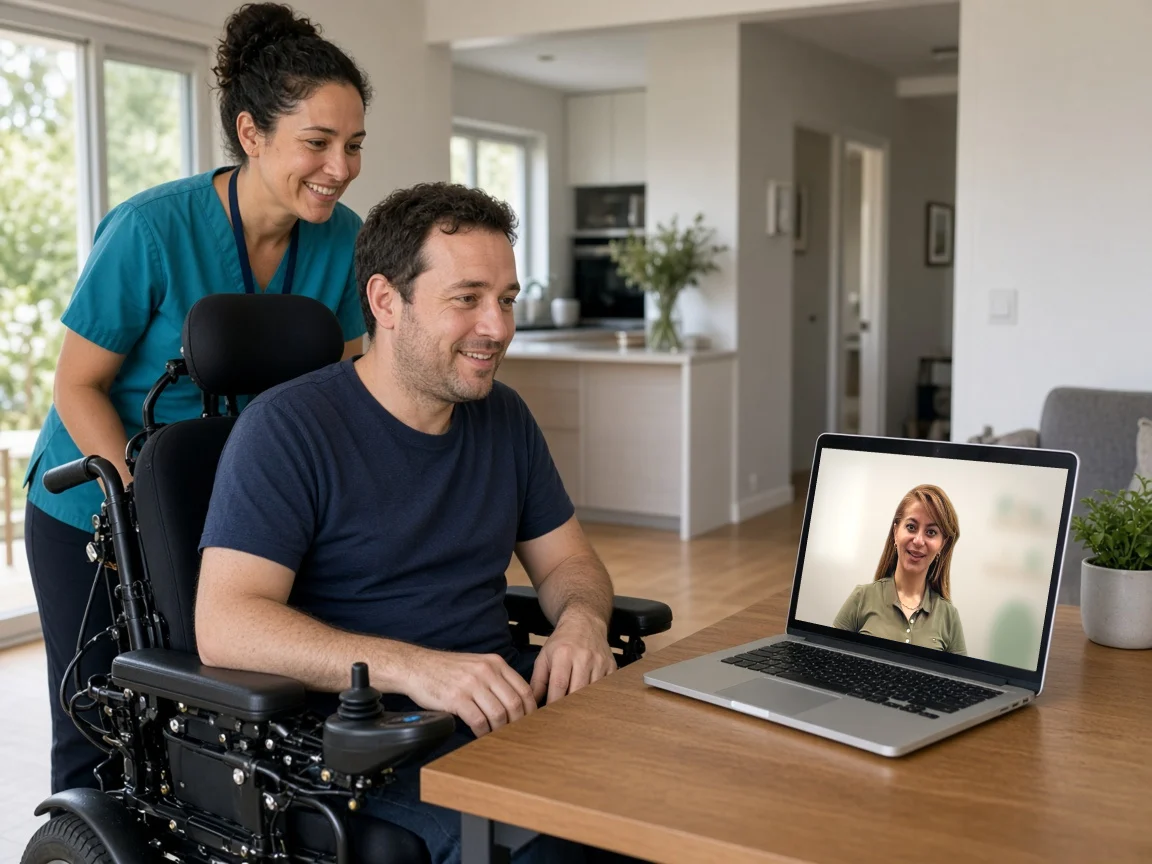
Simple, calm and at your pace. You join from home on a laptop, tablet or phone, and Bita guides you through what to look at, try or show her on camera.
Here is how it usually goes.
OUR ONLINE SERVICES
Eight online services, each explained below. If you are not sure which fits, a discovery call is a good place to start.
1
Ongoing occupational therapy sessions by secure video for NDIS participants: building daily living skills, routines, sensory and regulation strategies, and working toward your own goals. Supports can include sensory strategies and therapy for daily living or vocational goals. Self-managed, plan-managed and NDIA-managed participants are welcome, and family, carers and support coordinators can join. We cannot promise what any plan will include, and we are happy to talk it through.
2
Occupational therapy by video for older adults receiving Support at Home or a home care package, to help you stay safe, confident and independent at home, with falls prevention, cognitive support and safe ageing at home through equipment advice and home modifications. Clients with an approved package through My Aged Care are welcome, and family and carers can join.
3
For NDIS and Support at Home clients: we talk through what is hard, look at how you do things now, and recommend equipment or technology that may help. That includes expert advice, assessments, trials, reports and training, with a clear written report.
4
For NDIS and Support at Home clients: a video walk-through of your home to understand access, safety and daily routines, from ramps to bathroom redesigns, followed by recommendations and a report. We can work with your builders or architects. If a complex job needs someone on site, we will tell you.
5
Clear, well-organised occupational therapy assessment reports based on what we learn from you and your supports by video. Reports can be provided for NDIS reviews, DVA documentation or other needs.
6
Functional Capacity Assessments completed by telehealth where suitable, with a report that describes how disability affects daily life and the supports that may help. Decisions are made by others and we cannot predict them.
7
Where a report is needed for a Disability Support Pension claim, we can describe how a health condition affects your everyday function, and we also offer functional skills building. Decisions are made by Services Australia and we cannot predict outcomes.
8
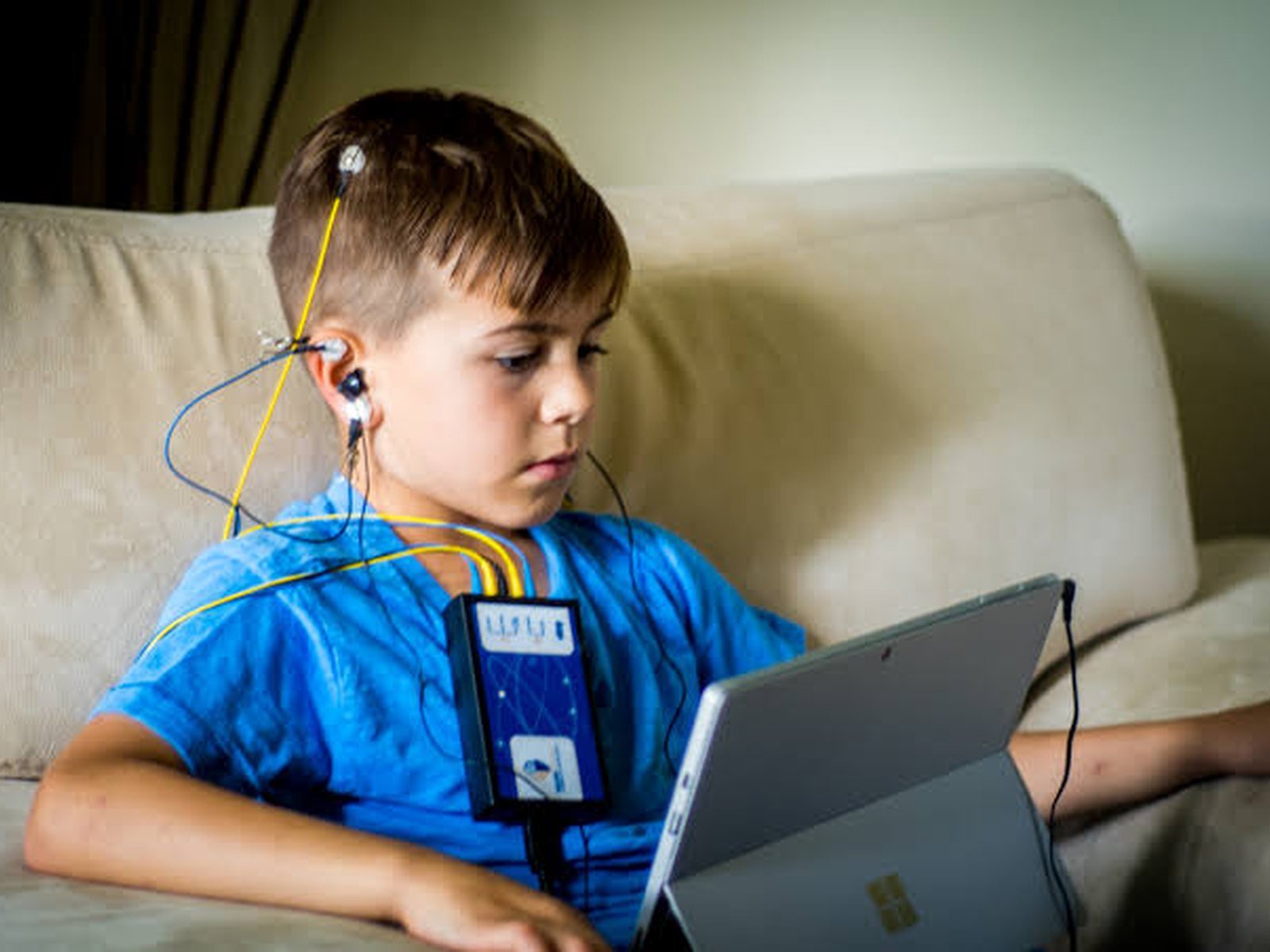
We send a complete NeurOptimal® Neurofeedback home station to you by Express Post and set it up with you by video, so people at home, including in rural and remote areas, can access the service. Rental is available Australia-wide. NeurOptimal® is a general-wellness brain-training system and does not diagnose, treat, prevent or cure any medical or psychological condition. Experiences vary.
WHO WE SUPPORT
Beyond the services above, we also support clients through these pathways. Every situation is different, and we can talk through your options on a free discovery call.
Cognitive screening, memory strategies and independence-focused therapy for older adults who pay privately.
Functional assessments and support with PTSD, pain or mobility needs. A GP referral is needed for DVA clients.
Energy and pain management, routines and safety planning. A GP referral and care plan are needed if you want to use a Medicare rebate under Chronic Disease Management.
Routine support, skill building and assistive technology assessments. Whether you can claim depends on your policy, so please check with your fund.
Return-to-work strategies, ergonomic assessments and injury management, usually through an insurer or employer referral.
Therapy that is tailored to your environment and the limited local resources where you live.
COMMON PRESENTATIONS
Telehealth OT is not about a diagnosis label. It is about the day-to-day things that have become hard. These are some of the most common reasons people come to us.
From generalised anxiety to panic and social anxiety, strategies to manage symptoms, rebuild confidence and support engagement.
Help with executive functioning, emotional regulation and structured routines that suit you.
Adaptive strategies, energy conservation and equipment to support daily living.
Activity scheduling, goal setting and meaningful re-engagement for better mental health.
Support with memory loss, confusion and daily function through environmental changes and routine planning.
Support with social participation, sensory regulation and life skills across age groups.
We also support trauma, sleep difficulties, brain injury and carers of people living with dementia.
HOME STATION, ANYWHERE
Some things are easier at home. We send you a complete NeurOptimal® Neurofeedback system by Express Post, then set it up with you by video or phone. People in the city, in a regional town or on a farm hours from the nearest clinic can use it in their own space, and the whole household can join in.
NeurOptimal® is a general-wellness brain-training system. It does not diagnose, treat, prevent or cure any medical or psychological condition, and individual experiences vary.
HONEST ABOUT FIT
Many everyday goals work well on video: routines, sleep, sensory and regulation strategies, planning, parent and carer coaching, school or work strategies, and talking through a home or equipment set-up. Some tasks are best seen in person, and for some people another service is the better fit.
That is part of safe telehealth. Bita will tell you when a visit or a different service would serve you better, and will keep checking that telehealth is working for you.
TECH AND PRIVACY
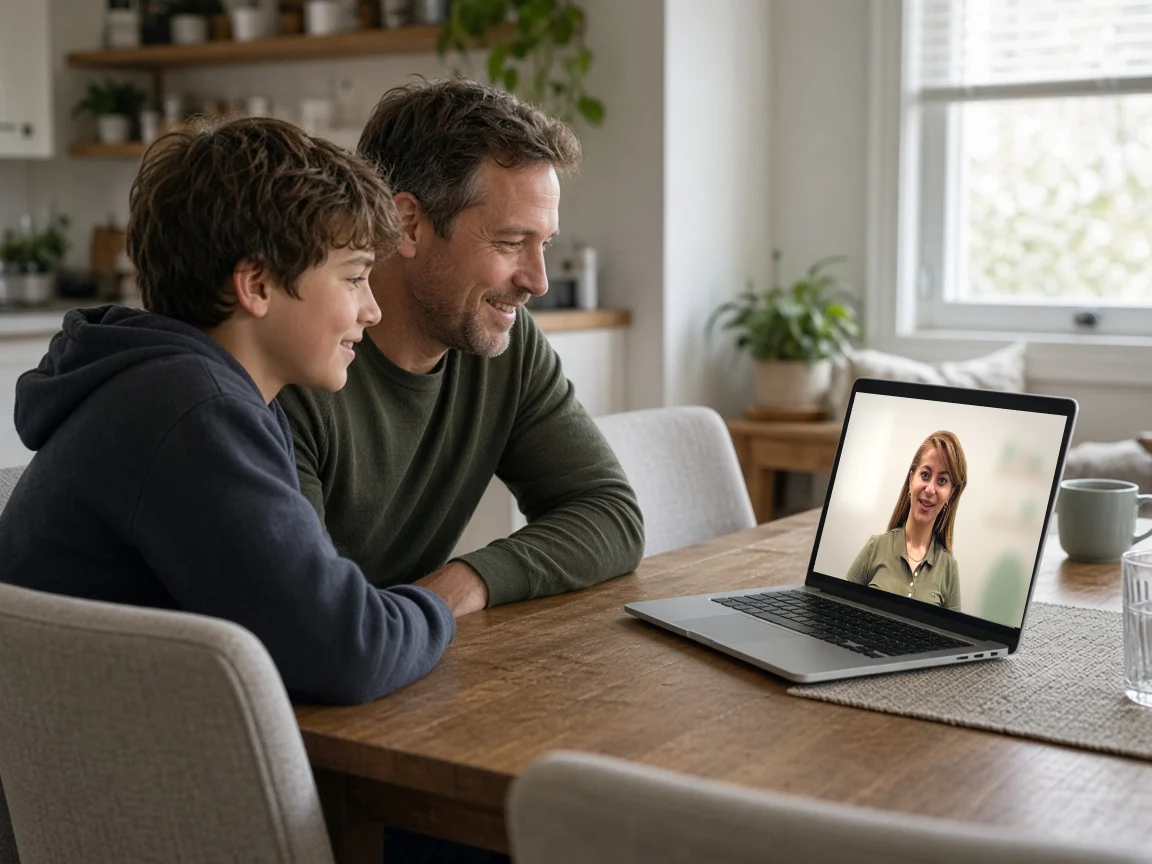
A phone, tablet or computer with a camera and microphone, and a stable internet connection.
Somewhere you feel comfortable. A parent or carer is always with young children, and some older adults like a support person nearby.
We usually use Cliniko’s secure telehealth, and we will work around whatever platform is convenient for you. We never record without your clear consent.
If the video drops out, we call you on the phone to finish or reschedule. We check your set-up before your first session.
We handle your information in line with Australian privacy requirements, and AHPRA expects telehealth to meet the same standard of care as an in-person appointment.[4]
THE EVIDENCE
A systematic review of fifteen studies found that most reported positive effects from occupational therapy delivered by telehealth, across a range of ages and conditions. The authors also noted there was not yet enough evidence to say it is better than face-to-face therapy.[1] In other words, for many people it is a good alternative, not a magic fix.
For home assessments, a study that compared video assessments with in-home visits found that the video assessment picked up most of the same access problems and measurements.[2] A later review agreed that home assessments by telehealth are feasible and efficient, while noting that an in-person visit is more accurate at spotting hazards.[3] That is why we will always say when a visit is the better choice.
Occupational Therapy Australia’s telehealth guidelines and the Occupational Therapy Board of Australia’s telehealth guidance both ask OTs to check that telehealth suits each person, to gain informed consent and to protect privacy.[5][4]
AUSTRALIA-WIDE
We are based in Wembley, Perth, and work with people in every state and territory. Distance should not decide whether you can see an occupational therapist.
From our Wembley base we support clients across Perth, including Trigg, Gwelup, Innaloo, Balcatta, Karrinyup, Doubleview, North Beach, North Perth, East Perth, South Perth, Osborne Park and Watermans Bay, and across WA, NSW, VIC, QLD, SA, TAS, the ACT and the NT.
From Geraldton and Kalgoorlie to Broome, Karratha and Albany, and every town between. You do not need to travel to Perth to see us.
New South Wales, Victoria, Queensland, Tasmania and the ACT, in cities and regional centres alike.
Adelaide, Darwin, Alice Springs and remote communities, where local OT services can be hard to find.
YOUR OCCUPATIONAL THERAPIST
Senior Occupational Therapist Bita Farahani leads our team delivering online occupational therapy across the country. She has 21 years’ experience across community mental health, disability, aged care and neurorehabilitation. Her approach is warm, neuro-affirming and practical: she looks at what your days ask of you, then builds routines, skills and supports that fit your real life.
She works from Wembley, Perth, and by telehealth across Australia.
WHY WORK WITH US
FUNDING, REFERRALS AND WAITING TIMES
Funding. Sessions can be funded in different ways, and every situation is different. We cannot promise what any NDIS plan, aged care package or other scheme will cover. We can talk through funding options on a discovery call, so you know where you stand before you decide.
Referrals. No referral is needed for most of our services. A GP referral is needed only if you want to use a Medicare rebate under Chronic Disease Management (a GP care plan), and for DVA clients. If you are a GP or other professional who would like to refer, you are welcome to make a referral.
How soon. The usual wait for a first telehealth session is about 1 to 2 weeks. This can change, and on your free discovery call we will be honest about availability.
QUESTIONS PEOPLE ASK
Telehealth occupational therapy is the same kind of OT you would have in a clinic or at home, delivered by secure video call. Bita works with you on everyday things like routines, sleep, sensory needs, daily living skills and planning, and can also complete assessments and reports by video where it is suitable. You only need a device with a camera, an internet connection and a reasonably quiet space.
For many people and many goals, yes. Reviews of the research have found mostly positive results for OT delivered by telehealth, although there is not yet enough evidence to say it is better than face-to-face care, and some tasks are best seen in person. Bita will tell you honestly if a particular goal would work better with a visit or another service, and you can read the references on this page.
A phone, tablet or computer with a camera and microphone, a stable internet connection, and a quiet, private spot. For children, a parent or carer is always with them, and some older adults like a support person nearby too. We usually use Cliniko’s secure telehealth, but we will work around whatever platform is convenient for you. We check the set-up with you before your first session and keep a phone number as a back-up if the video drops out.
Yes. Sessions usually run on Cliniko’s secure telehealth video, and we handle your information in line with Australian privacy requirements. We do not record sessions without your clear consent, and we talk with you about privacy and consent before you begin. AHPRA expects telehealth to meet the same standard of care as in-person appointments.
Yes, from about 4.5 years of age. For young children, a parent or carer is always in the session. Sessions are play-based, and we can coach you on what to try between sessions. Teens can often take part more independently, with family involved if they would like that.
No referral is needed for most of our services. A GP referral is needed only if you want to use a Medicare rebate under Chronic Disease Management (a GP care plan), and for DVA clients. If you are not sure, ask us on a free discovery call. If you are a GP or other professional, you can use our referral page.
Usually the wait for a first telehealth session is about 1 to 2 weeks. This can change, so on your free discovery call we will tell you honestly where availability stands.
Where it is suitable, yes. Bita can gather information by video with you and your supports, complete the assessment tasks that work well online, and write the Functional Capacity Assessment report. If something needs to be seen in person, we will say so. We cannot predict what any decision-maker will decide, but we aim to make the report clear, thorough and easy to follow.
Often, yes. By video, we can look at your home with you, talk through what is hard day to day, check measurements and layouts, and recommend equipment or changes for NDIS participants and Support at Home clients. A support person helping with the camera is useful. If a complex job needs someone on site, we will let you know.
Yes. Mental health OT focuses on the day-to-day side of things, such as routines, sleep, energy, anxiety, sensory overload, planning, focus, work or study. Many people find it easier to talk and try strategies in their own home. Telehealth OT does not replace medical or psychological care, and we work alongside your GP and other supports.
Yes. We are based in Wembley, Perth, and see people by telehealth anywhere in Australia, including across Western Australia, including the Pilbara, Kimberley, Goldfields, Mid West, South West and Great Southern, as well as in New South Wales, Victoria, Queensland, South Australia, Tasmania, the ACT and the Northern Territory.
Common reasons people see us include anxiety and stress (such as generalised anxiety, panic and social anxiety), ADHD and other neurodivergent needs, chronic pain and energy management, low mood and depression, dementia and memory changes, and autism and sensory processing. We also support trauma, sleep difficulties and brain injury. If you are not sure, ask us on a free discovery call.
Yes, after-hours appointments are available. Tell us what suits your routine on your free discovery call and we will do our best to fit around you.
Yes, if you would like them to. Families, carers and support people can join by video, and with your consent we can share summaries with other professionals involved in your care.
KEEP EXPLORING
How we work with NDIS participants, families and support coordinators.
Read moreOccupational therapy for older adults at home.
Read moreAssessments and reports, in Perth and by telehealth across Australia.
Read moreEveryday-life support for anxiety, ADHD, autism, trauma and more.
Read moreA home station delivered to your door, set up with you by video.
Read moreMeet your occupational therapist.
Read moreREADY WHEN YOU ARE
A relaxed, no-obligation chat about what you need and whether telehealth is a good fit. Call 0406 107 775 or use the button below.
Telehealth occupational therapy does not replace medical or psychological care. We cannot promise any particular outcome, funding decision or eligibility result. NeurOptimal® is a general-wellness brain-training system and does not diagnose, treat, prevent or cure any medical or psychological condition.