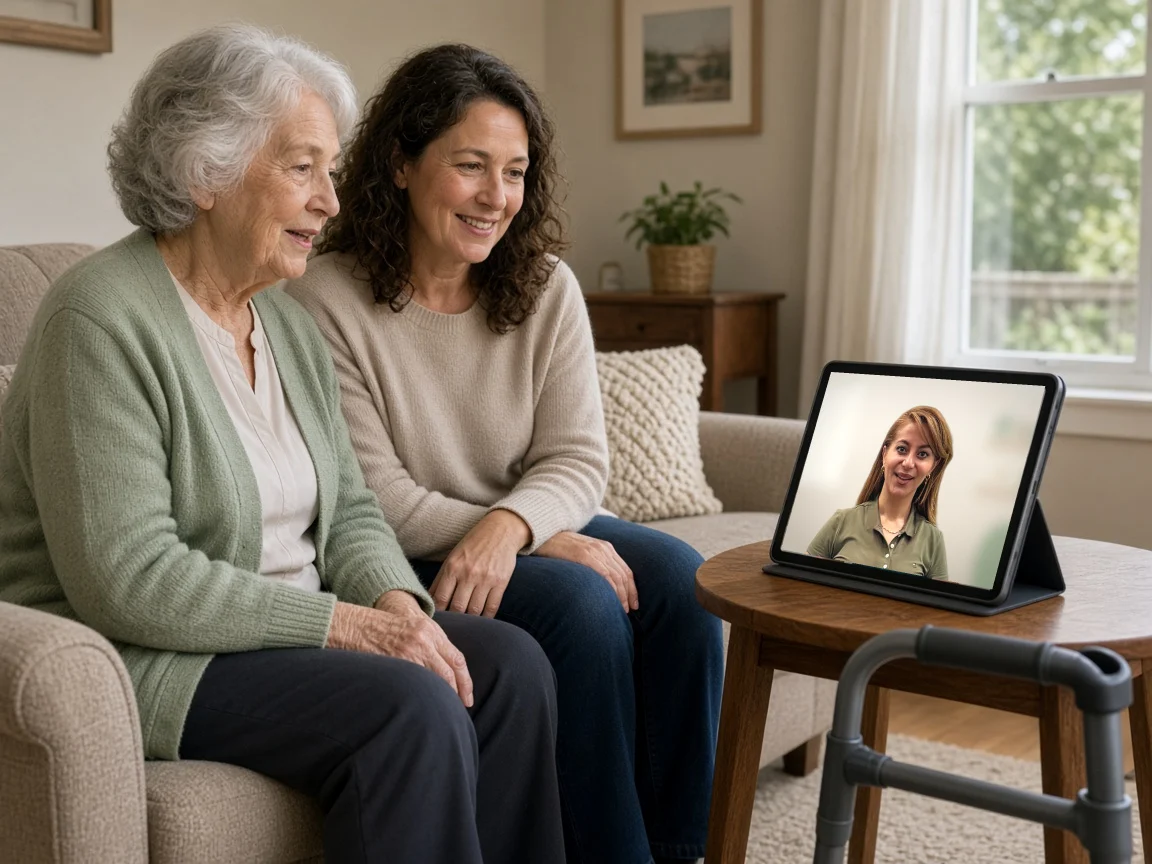
A home that worked well ten years ago can become tricky as we get older. Stairs, a slippery shower or a dark hallway can make everyday life harder and increase the risk of a fall. An occupational therapy home assessment is a practical way to spot those risks and plan sensible changes. This guide explains what to expect from an aged care OT home assessment in Perth, how home modifications are funded, and what happens afterwards.
What is an OT home assessment?
An occupational therapist (OT) visits your home and looks at how you move around and manage daily tasks there. The aim is not to judge your home. It is to find simple ways to keep you safe, confident and independent in the place you want to stay. People often ask for one after a fall, a hospital stay, a change in health, or when a family member starts to worry.
What happens during the visit
Most visits take around an hour or more, depending on your home and your goals. Here is what usually happens:
- A chat about you. The OT asks what you find hard, what matters to you, and what you want to keep doing.
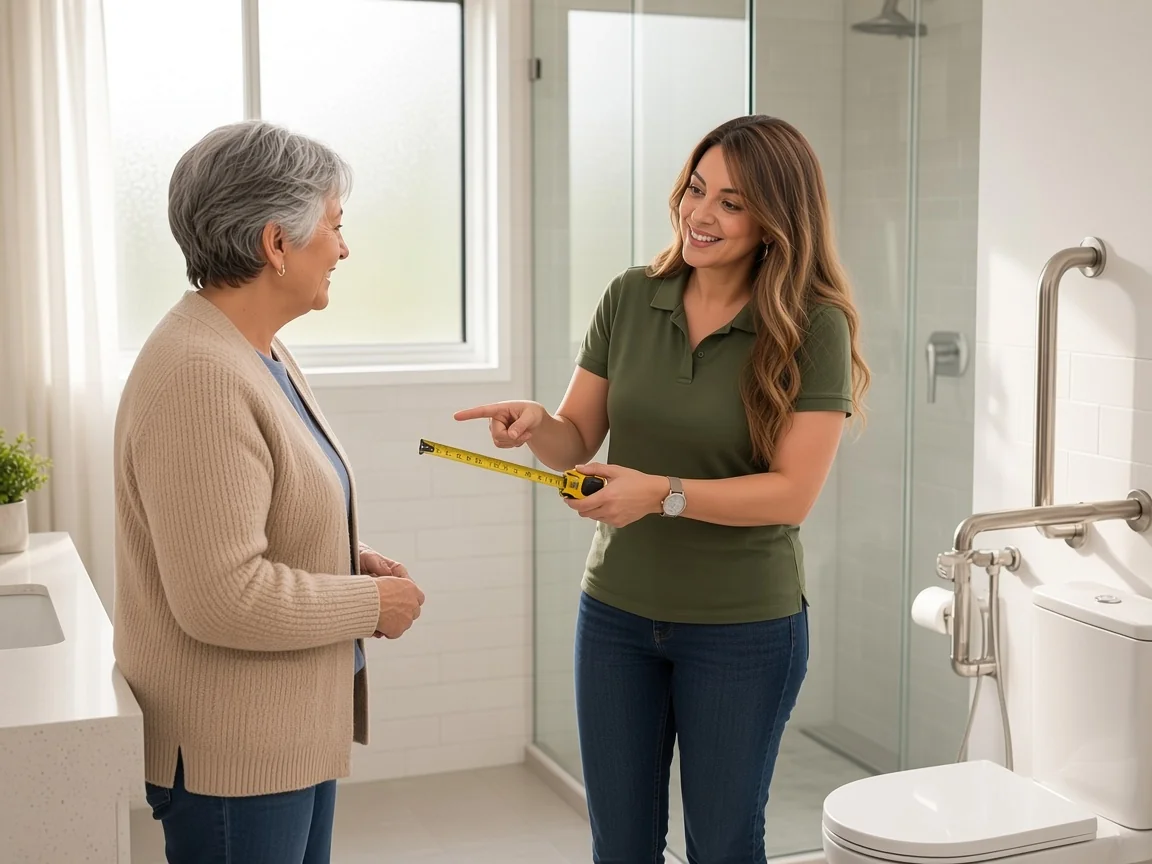
- A walk-through. The OT looks at entrances, steps, bathroom, toilet, bedroom, kitchen, lighting, floors and outdoor areas.
- Watching everyday tasks. You may be asked to show how you get in and out of the shower, up from a chair or into bed. This helps the OT recommend the right fix, not guess.
- Checking equipment you already use. Walkers, chairs and rails are checked for fit and safety.
- Talking through options. The OT explains what could help, in plain language, before anything is written down.
Family and carers are welcome to be there. If you are living with memory changes, bring someone who knows your routines well.
What an OT may recommend
- Falls prevention: clearer pathways, better lighting, non-slip surfaces, and a plan for getting up safely after a fall.
- Assistive technology: shower chairs, raised toilet seats, walking aids, bed rails, personal alarms and kitchen aids. Our assistive technology assessments cover how we match equipment to you.
- Minor changes: grab rails and handrails in the right place and at the right height.
- Larger modifications: ramps, step changes, bathroom redesign, wider doorways and stair lifts. Our home modification assessment page explains this further.
- Routine and cognition tips: simple strategies for memory, planning and managing tasks that may help you feel more in control.
How home modifications are funded
If you have been approved for Support at Home, there is a separate pool of funding called the Assistive Technology and Home Modifications (AT-HM) scheme. Your aged care assessor decides whether you are approved for a funding tier. The government’s published tiers are:
- Low: under $500
- Medium: up to $2,000
- High: up to $15,000
High-tier home modifications are capped at $15,000 over a lifetime, and assistive technology can go higher when the need is documented. The funding can cover the modification itself, trades and installation, and a prescription from a health professional. Participants usually contribute to the cost of items and modifications, but the prescription itself is a clinical support and is fully funded.
One rule matters here: all home modifications must be prescribed by an occupational therapist. That is why an OT assessment is usually the first step.
If you are on CHSP, home modifications are a separate service your provider may offer, depending on your approval. If you do not have aged care funding, you can still pay privately for an assessment and recommendations. Our guide to seeing an OT without a home care package explains the options.
How we work with your provider
We work with registered Support at Home and CHSP providers in Perth. If you have a provider, they are the ones who hold your funding and arrange quotes and tradespeople. Your provider can engage our senior occupational therapists to do the assessment. This is how it typically goes:
- You ask your provider to engage our team, or your provider contacts us.
- Your provider confirms the funding and the service details with us.
- We visit your home in Perth, assess, and talk through the options with you.
- We send a written report and prescription to your provider.
- Your provider gets quotes, arranges the work and keeps you informed. We can review how the changes are working for you.
We cannot promise funding, and your provider decides whether to engage us. We are happy to explain to you or your care manager what we would recommend and why.
Tips for getting ready
- Write down the tasks that worry you most: stairs, showering, getting out of bed.
- Have your aged care Notice of Decision and your provider’s details handy.
- Note any recent falls or near misses, and your current equipment.
- Ask your provider who will pay for the assessment and who will get the report.
- Think about the changes you would hate to make, and tell the OT. Good recommendations respect what matters to you.
Common questions
How long does an OT home assessment take?
Many take 60 to 90 minutes. A larger home or a complex bathroom change can take longer. The written report follows after the visit.
Are home modifications included in Support at Home?
They can be, through the AT-HM scheme, if your aged care assessment approves a funding tier. The OT’s prescription is what allows the work to go ahead.
Do I have to use the OT my provider chooses?
You can ask for a particular practice. Your provider decides whether it can engage them. If it cannot, you can still see an OT privately.
Will the OT tell me to move out?
The aim is to help you stay in your home safely if that is what you want. The OT looks at what changes may make that possible.
Book a conversation
Mental Health OT Australia
Unit 10B, Level 1, Foyer B, 151 Herdsman Parade, Wembley WA 6014
Monday to Friday 9am to 6pm, Saturday 9am to 3pm. Sunday closed.
Call 0406 107 775 or send us a message on our contact page. Care managers can use our referrals page.
Learn more about occupational therapy for older people and OT under Support at Home. This article is general information only. Always check current funding rules with My Aged Care or your provider.