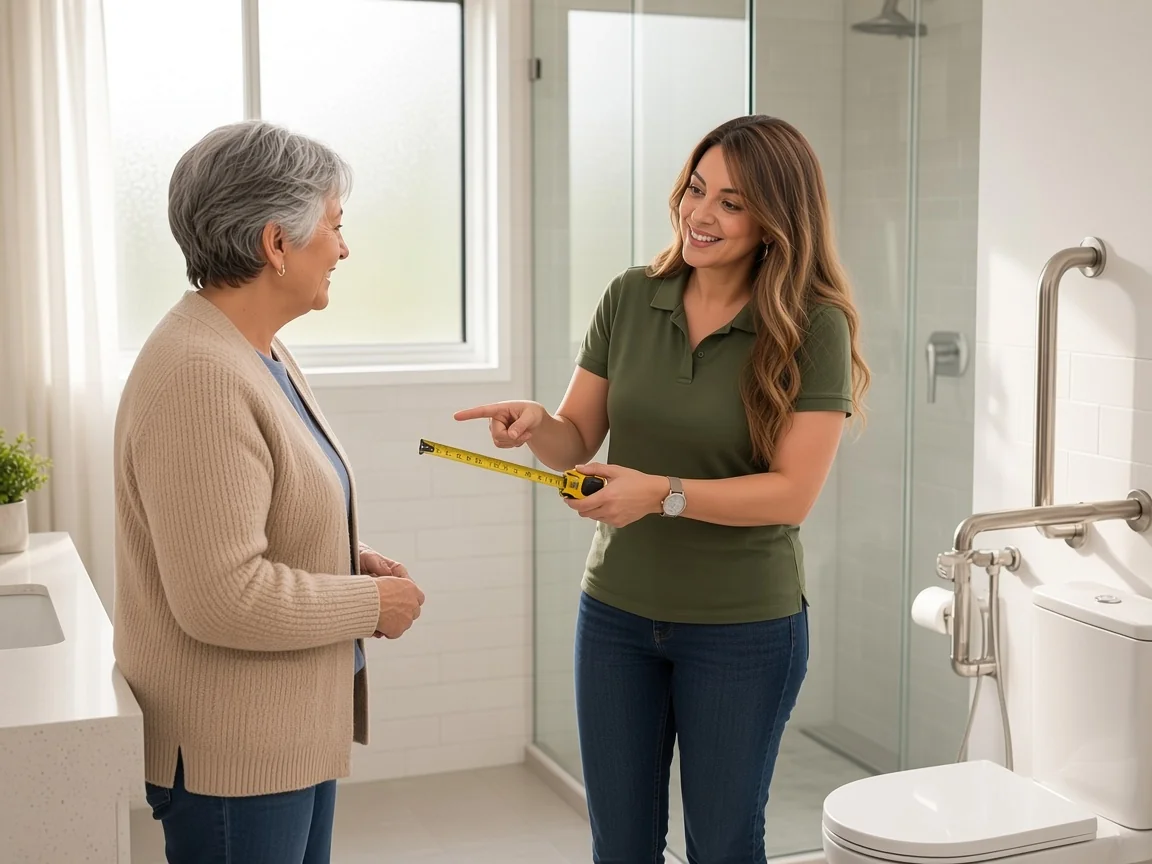

If you or someone you love is thinking about occupational therapy (OT) at home, the aged care system can look confusing from the outside. The good news is that the steps are fairly simple once you know the order. This guide explains how to get occupational therapy through Support at Home in Perth, what to ask your provider, and where our team fits in.
What is Support at Home?
Support at Home is the Australian Government’s in-home aged care program. It started on 1 November 2025 and replaced Home Care Packages. It is for older people who need ongoing help to keep living safely at home. Entry-level help is still available through the Commonwealth Home Support Program (CHSP), which the government has extended to 30 June 2029.
Occupational therapy is on the list of allied health services that can be funded. It is generally treated as a clinical support, and participants are not asked to contribute to clinical supports. Your provider will confirm exactly what applies to you.
What can an OT help with at home?
An occupational therapist looks at how you manage everyday tasks and your home, then suggests practical changes. Depending on your goals and approved funding, OT may help with:
- Falls risk and home safety checks
- Equipment and assistive technology, such as shower chairs, walkers and raised toilet seats
- Home modifications, such as grab rails, ramps and bathroom changes (see our guide to home modification assessments)
- Everyday routines like showering, dressing, cooking and getting around the house
- Memory, thinking and mental health supports that may help you stay independent and confident
The steps to get OT through Support at Home
Step 1: Contact My Aged Care
Everything starts with My Aged Care. You, a family member or your GP can call 1800 200 422 (Monday to Friday 8am to 8pm, Saturday 10am to 2pm) or apply online at myagedcare.gov.au. They will check whether you can have an aged care assessment.
Step 2: Have your aged care assessment
An assessor talks to you about your health, your home and what you find hard. They decide which program suits your needs and what services you are approved for. You will receive a Notice of Decision. If the assessor recommends assistive technology or home modifications, it will say so.
Step 3: Wait for your funding, then choose a provider
Funding is allocated through a priority system, so there can be a wait. Once it is available, you choose a registered provider. You can search by suburb on My Aged Care’s Find a provider tool. Under Support at Home you use one provider for your ongoing services, so check that the provider can arrange the allied health you want.
Step 4: Ask your provider to arrange an OT
Tell your care partner or care manager that you would like an OT assessment, and say why: a fall, trouble with the bathroom, new equipment or changes at home. Your provider either uses its own OT or engages an outside allied health practice. You can ask for a particular practice, but the provider decides whether it can engage them and agrees the service and price with you.
Step 5: The OT visits and reports back
The OT assesses you and your home, sets goals with you and writes recommendations. For equipment and home modifications, the report goes to your provider, who arranges quotes and installation. All home modifications must be prescribed by an occupational therapist.
How we work with your provider
We work with registered Support at Home and CHSP providers across Perth. If you would like our senior occupational therapists, ask your provider to contact us. Your provider can engage our OTs for assessments and follow-up, and we send our findings back to them. Here is how it usually runs:
- You tell your provider you would like to work with us, or your provider calls us directly.
- Your provider confirms the funding and sends us the referral and service details. No funding decision is made by us. That belongs to your provider and the program rules.
- We see you at home in Perth, or by telehealth where it suits the goal, such as cognition or mental health support.
- We report to your provider, with clear recommendations and, where needed, a prescription for equipment or modifications.
- Your provider arranges the next steps, and we are available to review how things are going.
Please note that we cannot promise any funding outcome, and whether your provider engages us is their decision. If your provider already has its own OT, you may simply prefer to use them. If you do not have a provider or approval yet, you can also see us privately. Our guide to seeing an OT without a home care package explains those options.
Questions to ask your provider
- Do you have your own OT, or do you use outside practices?
- How long does it usually take to book an assessment?
- Will the OT’s report come to me as well as to you?
- If I need equipment or modifications, who arranges the quotes and the tradespeople?
- Can I ask for a particular OT practice?
Common questions
Do I need a referral to get OT under Support at Home?
You do not need a GP referral for OT through Support at Home. You need an aged care assessment and approval. Your provider then arranges the OT, or you can ask them to engage a practice you prefer.
Is occupational therapy free under Support at Home?
The Department of Health, Disability and Ageing says participants do not contribute to clinical supports. OT is treated as a clinical support, so there should be no co-contribution for the OT itself. Equipment and modifications are different and often need a contribution. Ask your provider for a written price.
Can I get OT while I wait for funding?
Yes. You can see us privately while you wait. Private fees apply, and you can call us on 0406 107 775 to talk it through.
Talk to our team
Mental Health OT Australia
Unit 10B, Level 1, Foyer B, 151 Herdsman Parade, Wembley WA 6014
Monday to Friday 9am to 6pm, Saturday 9am to 3pm. Sunday closed.
Call 0406 107 775 or use our contact page. Providers and care managers can send details through our referrals page.
You can read more about Support at Home occupational therapy and OT for older people on our website. This article is general information, not personal advice. Rules and funding can change, so always check with My Aged Care or your provider.