
NDIS OCCUPATIONAL THERAPY · PERTH AND TELEHEALTH
Occupational Therapy for Oppositional Defiant Disorder (ODD)
Occupational therapy for children, teens and adults with oppositional defiant disorder, and for the families who care for them. Support may include NDIS therapy and a Functional Capacity Assessment (FCA) report.
Care led by Bita Farahani, Founder and Senior Occupational Therapist, with 21 years’ experience · Referrals · Contact Us
Who it’s for
Children, teens and adults with ODD, diagnosed or suspected, and their families.
Where
Home, school, the community, our Wembley base, or telehealth across Australia, including regional WA.
Our approach
Calm, consistent and collaborative. Parent coaching, emotional regulation and practical daily-life goals.
Four supports
Occupational therapy, optional neurofeedback, CBT-informed strategies, and NDIS Functional Capacity Assessments by Bita Farahani.
Referrals
Self-referral welcome, plus GPs, schools, support coordinators and other professionals.
UNDERSTANDING ODD
When an ordinary request turns into a long battle
It is an ordinary afternoon. Homework is on the table, or it is time to leave the park, or a parent asks for shoes to go on. What follows may feel much larger than the task itself: a raised voice, a slammed door, a long argument, or a child who cannot seem to come back to calm for some time.
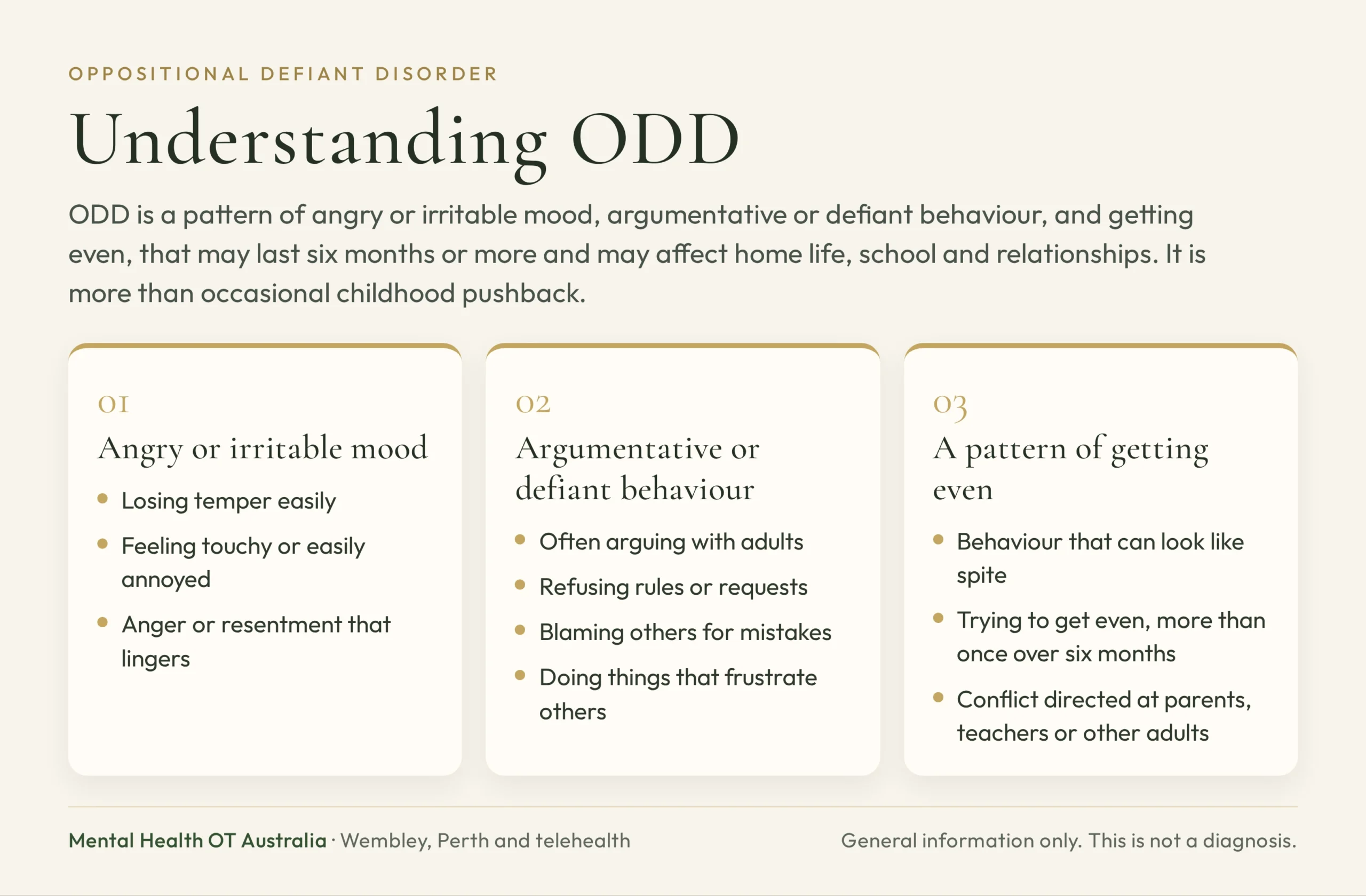
Many children argue, say no, or lose their temper. That is part of growing up. Oppositional defiant disorder, or ODD, is the name clinicians may use when a pattern of angry or irritable mood, argumentative or defiant behaviour, and getting even, lasts six months or more and begins to disrupt home life, school or relationships. Australian guidance such as Better Health Channel describes ODD as a childhood behavioural presentation.
This is not a story about a “naughty” child, or about parents who have not tried hard enough. A person with ODD is often distressed by the conflict as well. Occupational therapy looks at daily life — routines, emotions, sensory needs, family communication and school — and may help the person, and the people around them, find a calmer way through.
Who diagnoses ODD? A diagnosis of ODD is made by a paediatrician, psychiatrist or psychologist, usually after hearing from parents, teachers and the young person across more than one setting. An occupational therapist does not diagnose ODD. You do not need a diagnosis to book a 15-Minute Free Discovery Call. If you have questions about diagnosis, your GP is a good first step.
Signs often appear in the preschool or early primary years, sometimes later. With support, many children find things become more manageable over time. For some people, challenges continue into adolescence or adulthood. ODD also commonly sits alongside other conditions, including ADHD, anxiety, depression, autism or learning and communication differences. Some families also ask about PDA (a profile within autism), because the two can be confused.
How ODD may differ from PDA
Both can involve resisting rules or requests, so they are sometimes confused. The reasons, and the approaches that may help, are often different. An occupational therapist does not diagnose ODD or PDA. This comparison is general information only. You can also read our page on occupational therapy for PDA.
What may be driving it
Anger, irritability, resentment, or testing boundaries may be more central.
Anxiety, and a nervous system threat response when autonomy feels at risk.
Where resistance may show up
May be directed more often at authority figures, rules and tasks the person does not want to do.
May apply to many kinds of demand, including enjoyable activities and basic bodily needs.
What may help
Clear, consistent limits, calm responses and noticing what is going well may be more helpful for some people.
Reward and consequence systems may not help, and praise or rewards may feel like another demand.
SIGNS YOU MAY RECOGNISE
What ODD can look like, and how OT may help
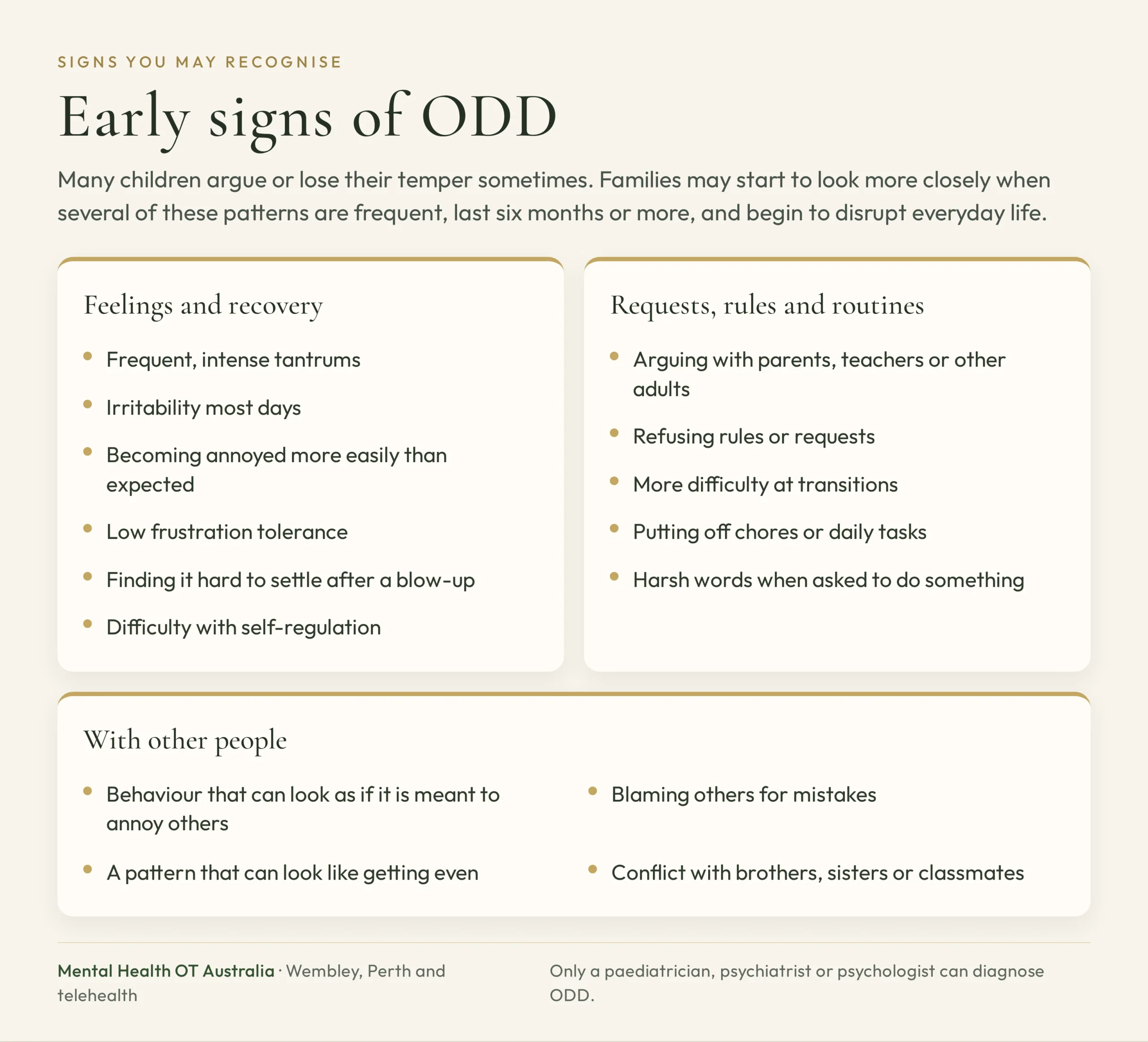
Every person is different, and these signs can change from day to day. Families may start to look more closely when several patterns are frequent, last six months or more, and begin to affect everyday life. Under each heading is the kind of support occupational therapy may offer. Goals are set with the person and their family, and we cannot promise a particular result.
Big feelings and a long recovery
A person may lose their temper often, stay irritable, or take a long time to settle after a blow-up. Frustration tolerance may be low, and self-regulation may feel hard in the moment.
How OT may helpCo-regulation, a simple calm-down plan made together, and practice noticing early body signs of stress, at a pace that suits the person.
Refusing requests, especially at transitions
Arguments or a firm “no” may be more likely when it is time to leave the house, start homework, come to the table, or move from one activity to the next.
How OT may helpPredictable routines with a little warning, two clear choices, and breaking a task into smaller steps so a start feels more possible.
Conflict with adults, siblings or peers
There may be frequent arguing with parents, teachers or other adults, harsh words, blaming others, or a pattern that can look like getting even. Brothers, sisters or classmates may also be drawn into the conflict.
How OT may helpCoaching for caregivers on consistent, calm responses, and skill-building around problem-solving, repair and getting on with other people.
Daily routines and chores
Getting ready, meals, homework or household jobs may turn into a long stall or a stand-off, even when the person can do the task at other times.
How OT may helpPractical, functional goals for the parts of the day that matter most, with supports that fit the person’s capacity on a given day.
THERE IS NO SINGLE CAUSE
What may contribute to ODD
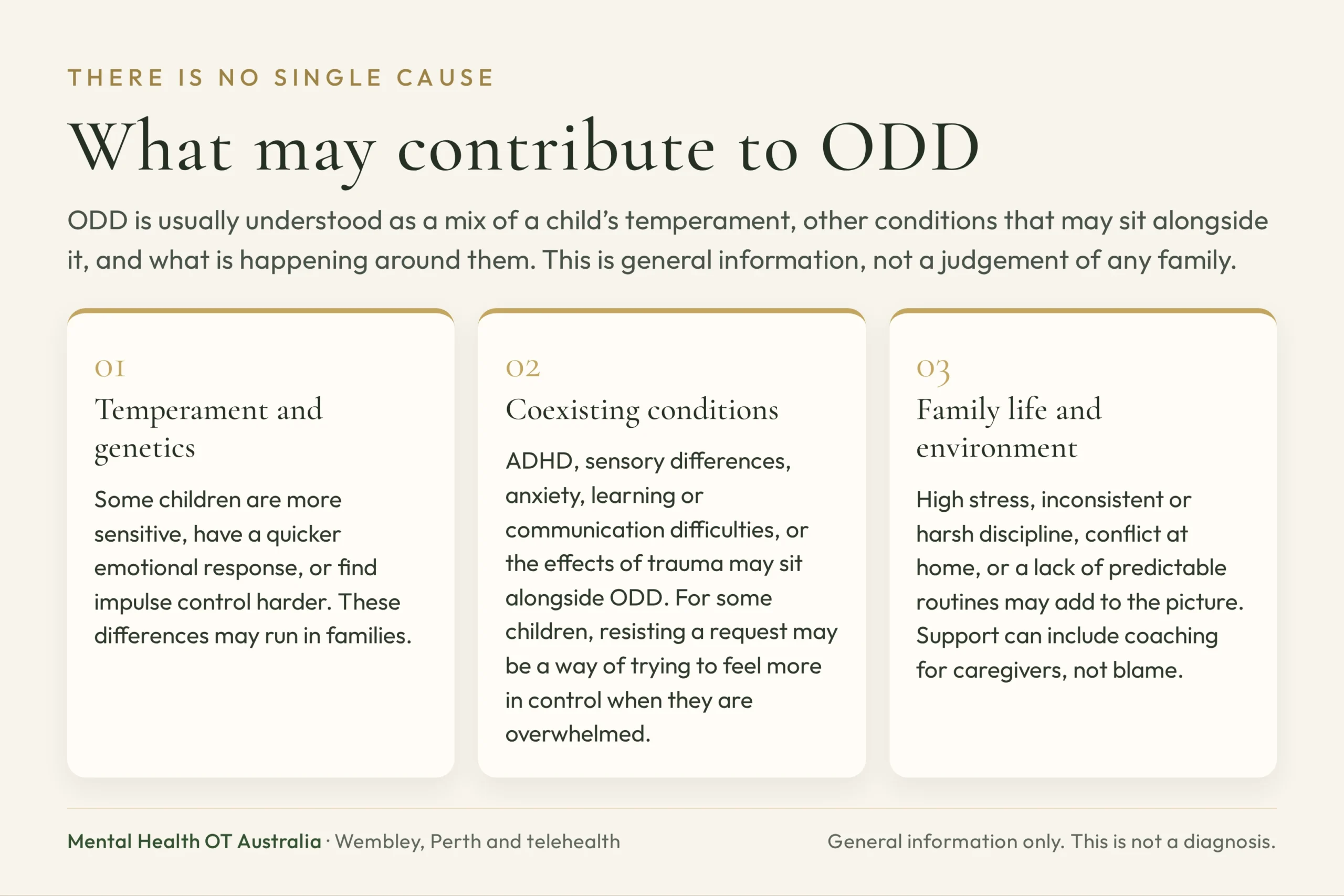
ODD is usually understood as a mix of a child’s temperament, other conditions that may sit alongside it, and what is happening around them. This is general information, not a judgement of any family.
Related pages: NDIS OT for ADHD · NDIS OT for autism · sensory processing · anxiety in children · emotional regulation
HOW WE WORK
Calm limits, connection, and skills for everyday life
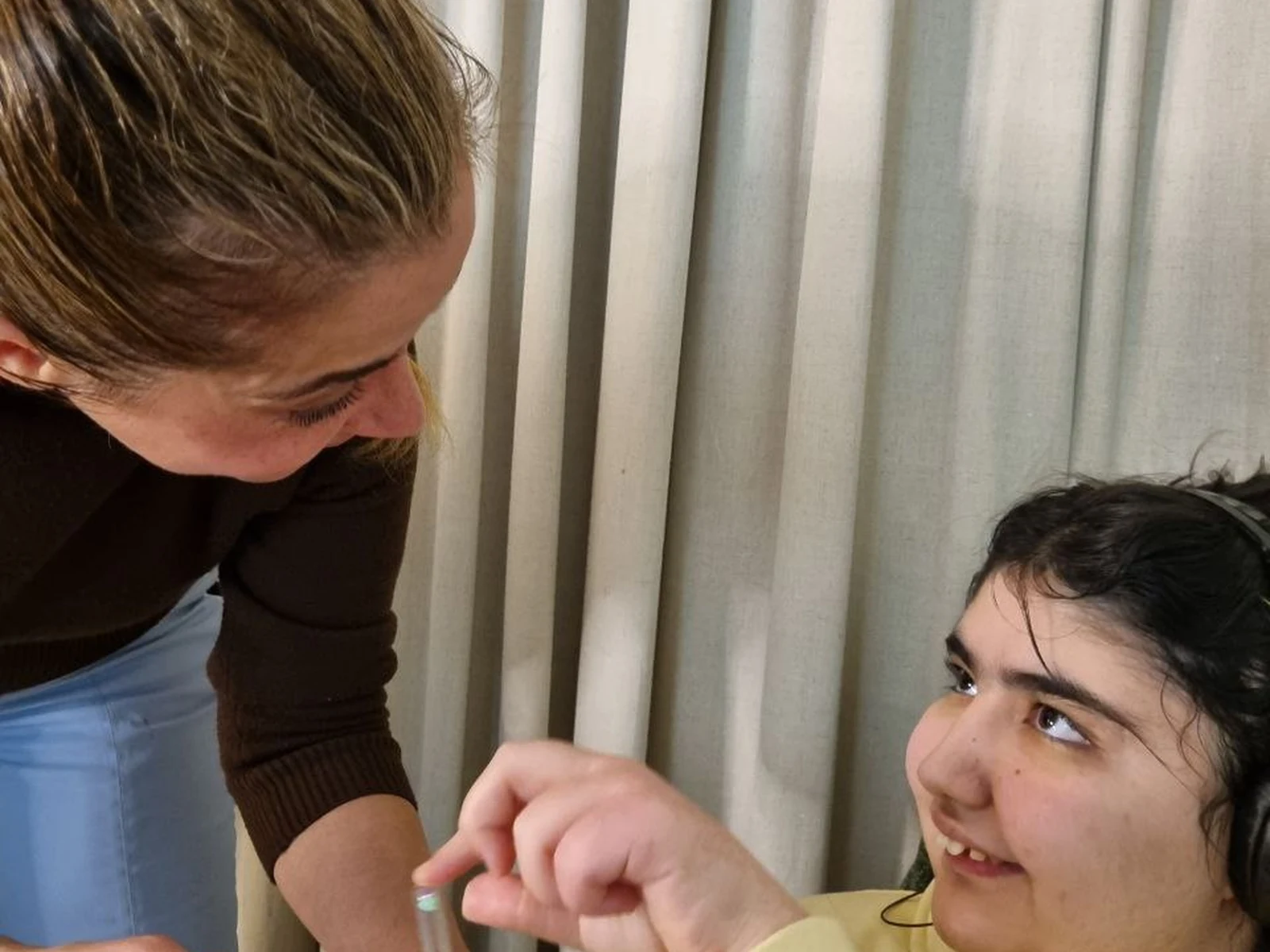
Occupational therapy for ODD is practical. We look at what is happening in real daily life, and we work with the person and their family, not on them. Support may include:
- Emotional regulation, so big feelings may be noticed earlier and may settle more safely.
- Daily routines for getting ready, meals, homework, chores and sleep, broken into smaller steps.
- Sensory needs and co-regulation, including how noise, movement, hunger or tiredness may add to a difficult moment.
- Parent coaching on consistent limits, calm responses, and noticing what is already going well.
- School coordination, with your consent, so home and school are pulling in a similar direction.
- Functional goals written in plain language, reviewed together over time.
Instead of…
- “Put your shoes on right now or you’ll be in trouble.”
- Correcting a child in front of siblings or classmates.
- A raised voice, or “Why are you always like this?”
- Only pointing out what went wrong.
You might try…
- “Shoes or jumper first — you can choose.”
- Stepping into another room and keeping your voice steady.
- “That felt really big. I’m right here.”
- “I noticed you started packing your bag yourself.”
These are general ideas, not a script, and not a promise about what will work for every child.
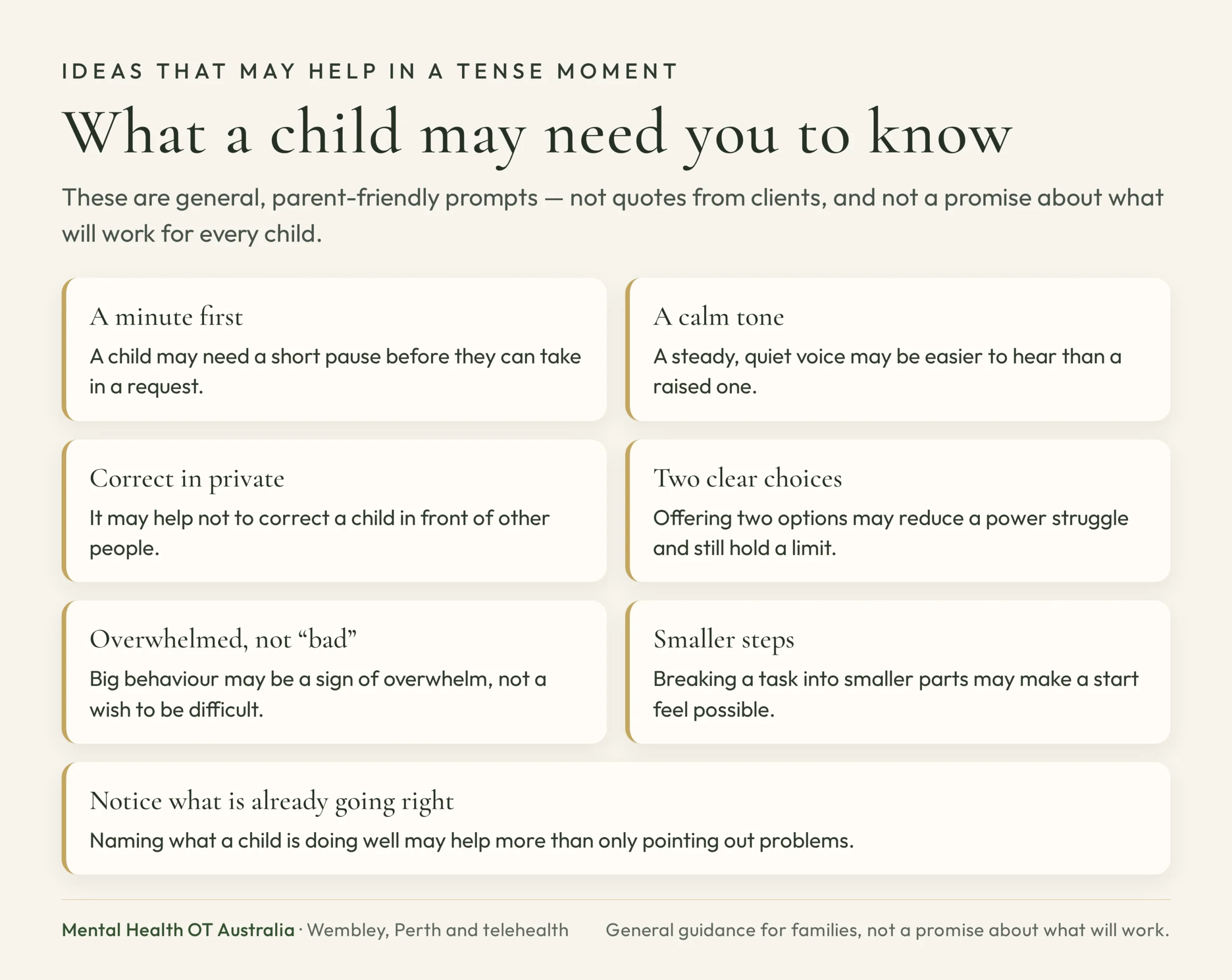
IDEAS THAT MAY HELP IN A TENSE MOMENT
What a child may need you to know
The prompts below are general, parent-friendly guidance. They are not quotes from clients, and they are not a promise about what will work for every child. An occupational therapist may help you adapt them to your own family life.
SENSORY REGULATION AND CO-REGULATION
Helping the body settle enough to try again
When a child is already hungry, tired, noisy-overwhelmed or still recovering from the last argument, the next request may land much harder. Occupational therapy may look at sensory needs, body signals and co-regulation — the way a calm adult can help a child’s nervous system settle — alongside the behavioural patterns families are most worried about.
Related support: OT for sensory processing · OT for emotional regulation
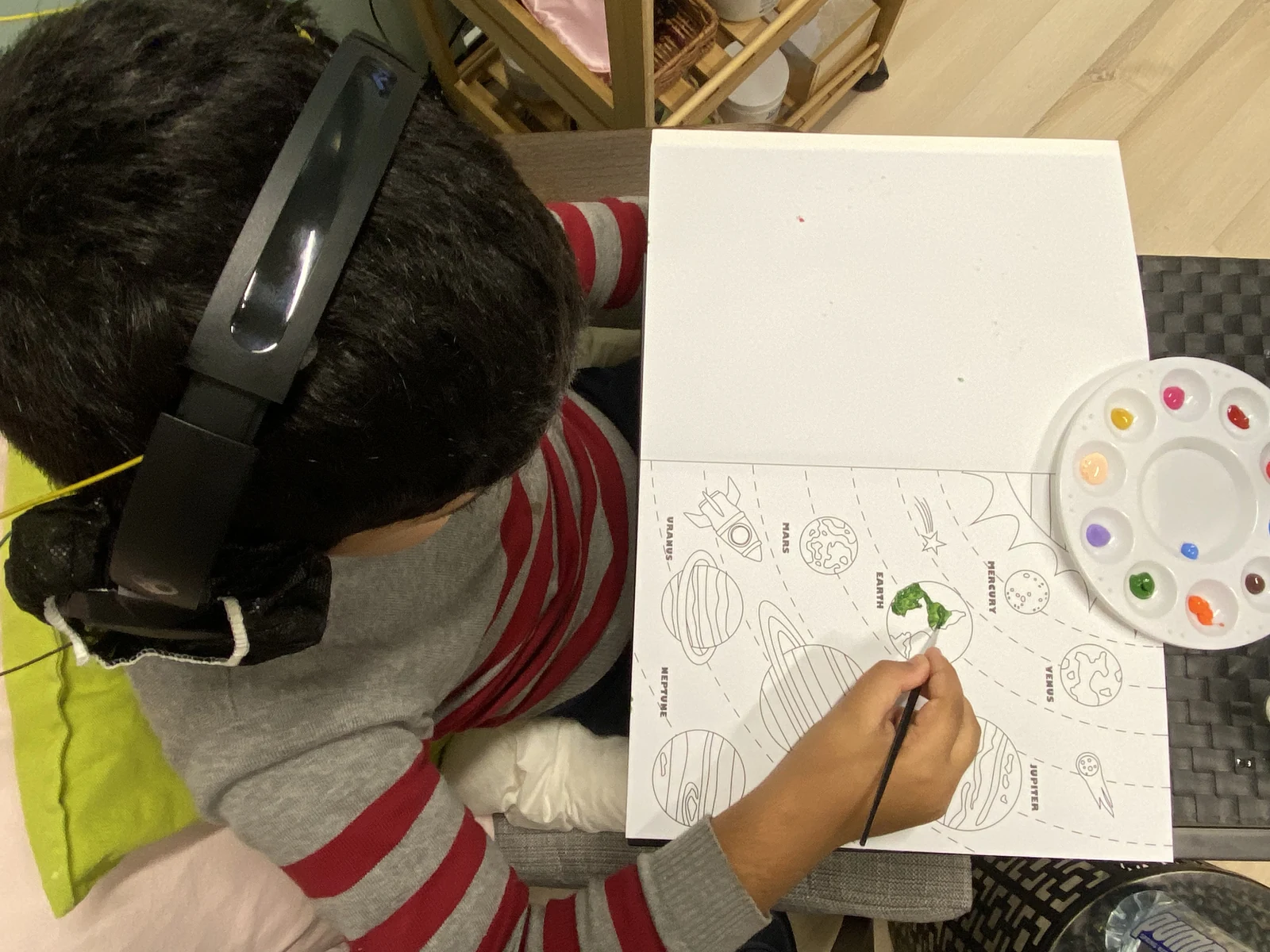
CHILDREN, TEENS AND ADULTS
ODD at home, at school and later in life
ODD is most often described in childhood, but support may still be useful in the teen years and, for some people, in adult life.
Children
Mornings, mealtimes, homework, sibling conflict and leaving the house are often the hardest points in the day. Play, movement and short, well-paced sessions may be the way in. We also coach parents, so what happens in the session can be tried at home.
Teens
Independence grows just as school and friendship demands rise. We work with the young person on their own goals — routines, emotional regulation, study or social life — and, with consent, we can coordinate with school.
Adults
Some adults continue to find anger, conflict or rigid stand-offs hard in family life, study or work. Support may include routines, regulation, communication patterns and planning around capacity, at a pace you choose.
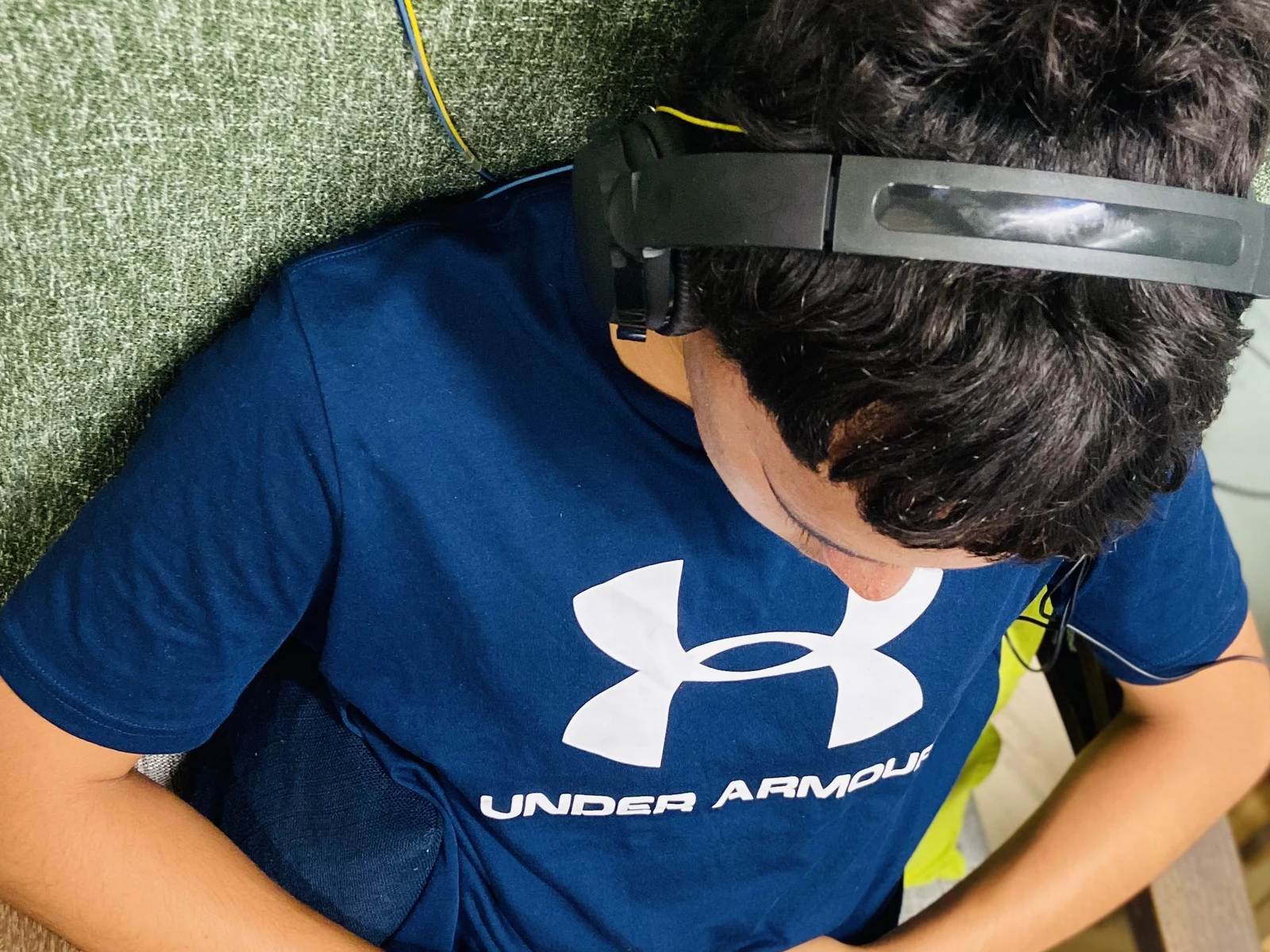
Sessions that fit the person in front of us
Sessions may happen at home, at school, at our Wembley base, in the community or by telehealth. We start with what matters to the person and their family, and we review goals together. You decide how long to continue.
SCHOOL, NDIS AND EVERYDAY GOALS
Practical goals that fit real life
We write goals in clear, functional language that matches what matters to the person and their family. Examples of what we may work on together:
- Getting ready and out the door with less conflict
- Moving between activities with a shorter recovery time
- Using a calm-down plan when frustration rises
- Taking part in school or study in a way that fits capacity
- Getting on more easily with siblings, classmates or family
- Completing a daily routine or chore in smaller steps
- Coaching for families, teachers and support workers in consistent, calm responses
- Joining family or community activities with a plan that feels manageable
With your consent, we can share practical recommendations with your child’s school. These might include a consistent response to conflict, a calm space, warning before transitions, two clear choices, and a plan for repair after a difficult moment.
NDIS
Occupational therapy may be funded through the NDIS for eligible participants, where it is part of the person’s plan. We work with self-managed, plan-managed and agency-managed participants. Funding decisions are made by the NDIA. OT and the NDIS.
Private health insurance
Some extras policies may include occupational therapy. Please check your cover with your insurer.
Self-funded
You can also pay privately. Current fees are on our Fees page.
NDIS FUNCTIONAL CAPACITY ASSESSMENTS
Functional Capacity Assessments for people with ODD
ODD can affect many parts of daily life, from self-care and family routines to school, work and community participation. Bita Farahani, Founder and Senior Occupational Therapist, with 21 years’ experience, provides NDIS Functional Capacity Assessments that describe how these patterns affect a person’s day-to-day functioning, and what supports may help. Every FCA is completed by Bita.
Paced around the person
The assessment is planned around the person’s capacity, with care about where, when and how it happens.
Clear, functional recommendations
We work with the person and their family or support network to describe strategies, environmental changes and supports that may reduce conflict and build capacity over time.
In Perth or by telehealth
In-person assessments in Perth, and telehealth assessments across Australia, including regional Western Australia. Funding decisions are made by the NDIA, and we cannot promise any outcome. Functional Capacity Assessment.
PERTH, REGIONAL WA AND ACROSS AUSTRALIA
Where we can work with you
In Perth: at our Wembley base, or at home, at school and in the community, where the difficult moments actually happen.
By telehealth: across Australia, including regional WA towns such as Bunbury, Busselton, Mandurah, Albany, Geraldton, Kalgoorlie and the Pilbara, and families in Sydney, Melbourne, Brisbane, Adelaide, Hobart and Darwin. Telehealth may suit some families because the person stays in their own space. Telehealth occupational therapy · Virtual reality OT.
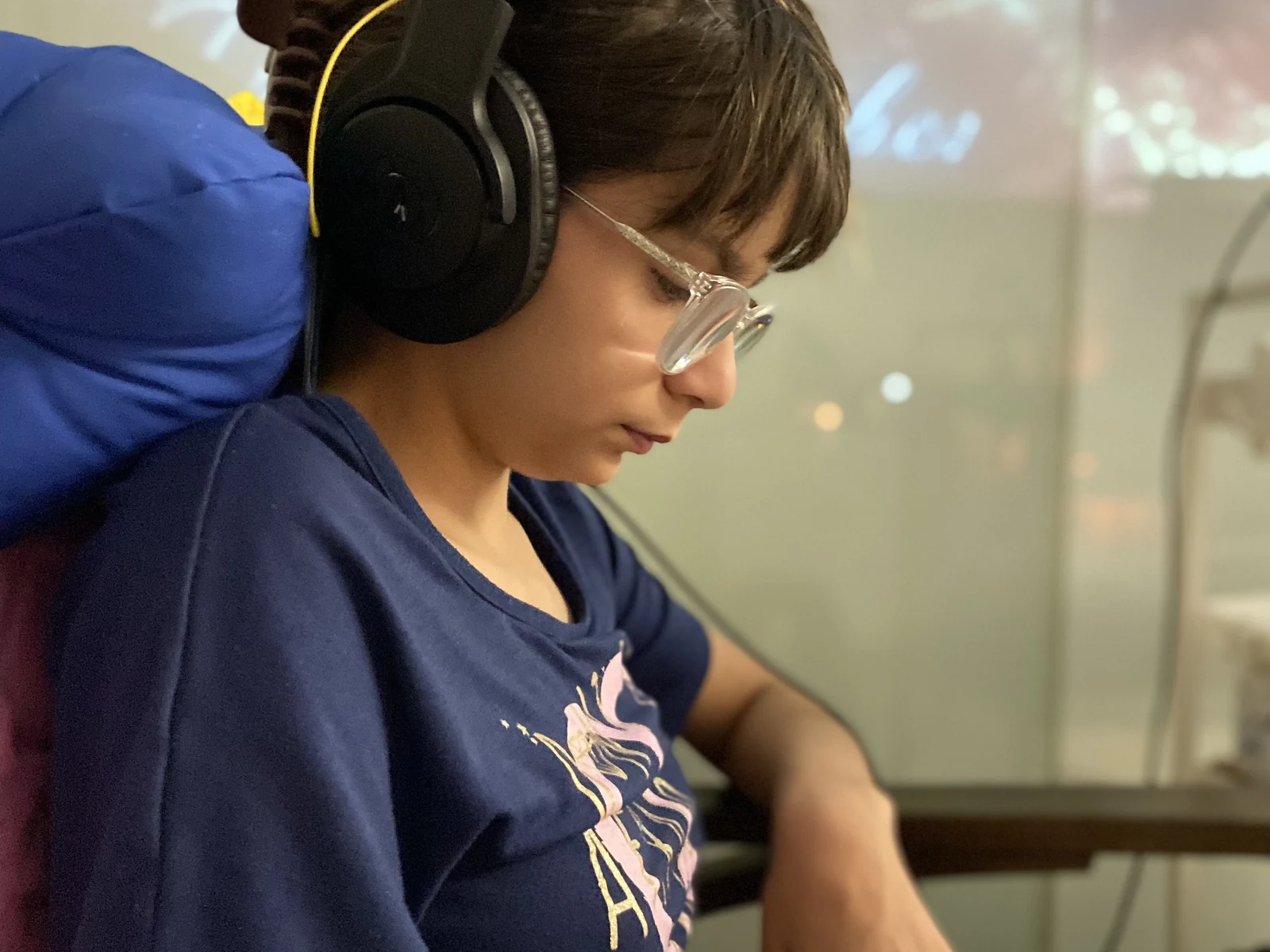
OPTIONAL TOOLS
Neurofeedback and virtual reality, used alongside OT
Some families ask about NeurOptimal® neurofeedback or virtual reality activities. Where they fit, and only if the person chooses them, they may be used as tools inside an occupational therapy plan, never on their own. NeurOptimal® is described by its maker as a training system, not a medical treatment. Virtual reality may offer a low-pressure way to explore and rehearse everyday situations. Neither neurofeedback nor virtual reality diagnoses, treats or cures ODD, and we cannot promise any particular result.
Neurofeedback · Autism and neurofeedback · Virtual reality OT
CBT-INFORMED STRATEGIES
CBT-informed strategies alongside occupational therapy
Within occupational therapy sessions, we may use strategies drawn from cognitive behavioural therapy (CBT), adapted so they stay practical and collaborative. For people with ODD, this may help with:
- Noticing early signs of frustration in the body
- Practising a calmer response once the intensity has dropped
- Building problem-solving skills for everyday conflicts
- Going at the person’s pace, with no pressure to “talk it through” while they are still upset
These are strategies used by an occupational therapist within OT, not psychological therapy. Psychological therapy is provided by psychologists, and we are happy to work alongside the person’s psychologist.
GETTING STARTED
From first call to your own plan
A 15-minute call
A free, no-obligation phone chat about daily life, goals, where sessions could happen and funding. It is not an assessment.
Getting to know you
An occupational therapy assessment of daily life: conversations, gentle observation and, with consent, input from family or school.
Sessions and review
Sessions at home, at school, in Wembley or by telehealth, with family coaching and regular reviews against your goals. You decide how long to continue.
QUESTIONS
Questions families and adults ask about ODD
What is oppositional defiant disorder (ODD)?
ODD is the name clinicians may use when a pattern of angry or irritable mood, argumentative or defiant behaviour, and getting even, lasts six months or more and begins to affect home life, school or relationships. It is more than occasional childhood pushback. Australian guidance such as Better Health Channel describes ODD as a childhood behavioural presentation. Every person is different.
Who can diagnose ODD?
A diagnosis of ODD is made by a paediatrician, psychiatrist or psychologist, usually after hearing from parents, teachers and the young person across more than one setting. Occupational therapists do not diagnose ODD. If you have questions about diagnosis, your GP is a good first step.
Do we need a diagnosis to see you?
No. You do not need a diagnosis of ODD to book a 15-Minute Free Discovery Call. Occupational therapists do not diagnose ODD. We can still look at daily life — routines, emotions, sensory needs and school — and talk about what support may help.
How may occupational therapy help a child with ODD?
Occupational therapy looks at everyday life: getting ready, meals, homework, play and getting on with other people. We may work on emotional regulation, daily routines, sensory needs and co-regulation, parent coaching on consistent calm responses, and school coordination. Goals are agreed together, and we cannot promise a particular result.
How may ODD differ from PDA?
Both can involve resisting rules or requests, so they are sometimes confused. In ODD, anger, irritability or testing boundaries may be more central, and clear, consistent limits may help some people. In PDA, a profile within autism, avoidance is often driven by anxiety when autonomy feels at risk, and reward or consequence systems may not help. An occupational therapist does not diagnose ODD or PDA. You can read more on our OT for PDA page.
What other conditions can occur alongside ODD?
ODD commonly sits alongside ADHD, anxiety, depression, autism, sensory differences, or learning and communication difficulties. Only a doctor or psychologist can diagnose these conditions. We are happy to work alongside your GP, paediatrician, psychologist and school. Related pages include OT for ADHD, OT for autism and anxiety in children.
Do you provide NDIS Functional Capacity Assessments for people with ODD?
Yes. Bita Farahani, Founder and Senior Occupational Therapist, provides Functional Capacity Assessments that describe how ODD and related daily-life challenges affect functioning, and what supports may help. Every FCA is completed by Bita. Assessments are available in person in Perth and by telehealth across Australia. Funding decisions are made by the NDIA, and we cannot promise any outcome.
Can the NDIS fund occupational therapy for ODD?
Occupational therapy may be funded through the NDIS for eligible participants, where it is part of the person’s plan. We work with self-managed, plan-managed and agency-managed participants. Eligibility and funding decisions are made by the NDIA, and we cannot promise any funding outcome.
Do you work with teens and adults with ODD?
Yes. ODD is most often described in childhood, but we also work with teens and, where it is still affecting daily life, with adults. Support may include routines, emotional regulation, study or work, and family communication, at a pace the person chooses.
Do you offer telehealth, including regional Western Australia?
Yes. Telehealth is available across Australia, including regional Western Australia, where it suits the person’s goals. In Perth we can also see people at home, at school, in the community or at our Wembley base.
Do you use CBT-informed strategies?
Only if they suit the person, and only alongside occupational therapy. CBT-informed strategies are used by the occupational therapist within OT and are not psychological therapy; we can work alongside the person’s psychologist. We cannot promise any particular result.
What happens in a 15-Minute Free Discovery Call?
It is a short phone call about daily life, goals, where sessions could happen and how funding may work. There is no charge and no obligation to book. It is not an assessment or a therapy session.
READY WHEN YOU ARE
Start with a 15-Minute Free Discovery Call
A short, no-pressure phone call about daily life and what may help. There is no charge and no obligation to book. Professionals can send Referrals at any time.
Occupational therapy does not replace medical, psychological or other specialist care. We do not diagnose ODD, autism or PDA, and we do not promise any particular outcome or funding decision. Results vary from person to person. NeurOptimal® neurofeedback is a general wellness brain-training system. It does not diagnose, treat, prevent or cure any medical or psychological condition. NeurOptimal® is a registered trademark of Zengar Institute Inc. If you need urgent support, call Lifeline on 13 11 14, or 000 in an emergency. Functional Capacity Assessments describe functioning and do not determine funding. Funding information is general; please confirm current rules with the funder. Session fees are on our Fees page.
Mental Health OT Australia Pty Ltd · ACN 700 512 161